The Meaning of Weton Sujanan and How to Approach It Wisely
July 7, 2026
Lately, the term weton sujanan has appeared quite often on social media, usually linked to the potential for infidelity in a relationship. The term does originate from traditional Javanese almanacs, but many people interpret it in an exaggerated way without understanding its original context.
What Is Weton Sujanan
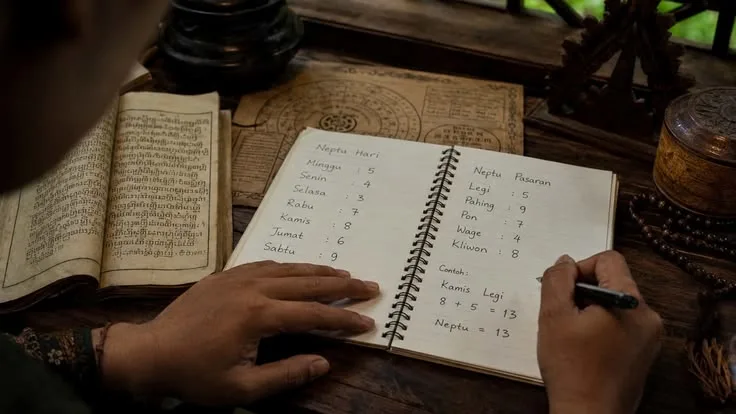
Sujanan is one of the categories used in weton compatibility calculations for couples, derived from adding up the neptu of both partners' weton and matching the result against a traditional almanac table. If the result falls into the sujanan category, it is usually interpreted as a potential sign of a third party or infidelity within the relationship.
Why This Term Is Often Misunderstood
Many people immediately assume that weton sujanan is a definite verdict that a relationship will end due to infidelity. In traditional almanac practice, however, the result of a weton calculation is more of a general tendency or possibility, not an absolute certainty. Other factors such as communication, commitment, and the overall quality of the relationship remain the main determinants of a relationship's success, not the weton calculation alone.
How to Approach It Wisely
If your partner's weton calculation falls into the sujanan category, there is no need to panic or end the relationship right away. Instead, it can serve as a reminder to strengthen communication and trust within the relationship, rather than being treated as a fate that must be feared. Many couples with this weton category still maintain harmonious relationships because of the effort and commitment they build together.
Why Weton Should Not Be Treated as an Absolute Determinant
Traditional almanacs and weton should be viewed as part of cultural heritage, not as a rigid determinant of fate. Treating weton as the sole reference point for judging a relationship risks overlooking the real effort both partners need to put in to build trust and emotional closeness.
Frequently Asked Questions
What does weton sujanan mean?
Weton sujanan is one of the categories in weton compatibility calculations for couples, interpreted as a potential sign of a third party or infidelity within a relationship.
Does weton sujanan definitely mean the relationship will end due to infidelity?
No. The result is more of a general tendency based on traditional almanac beliefs, not an absolute certainty, since the success of a relationship still depends on communication and commitment from both sides.
How is a couple's weton calculated to check for sujanan?
The method involves adding up the weton neptu of both partners, then matching the result against a traditional almanac table to see which category applies.
Does everyone believe in the concept of weton sujanan?
Not everyone does. Some view it purely as a piece of cultural heritage, while others still consider it before entering a serious relationship.
What should someone do if their partner's weton falls into the sujanan category?
It is best treated as a reminder to strengthen communication and trust, rather than as a reason to end the relationship without first putting in genuine effort.
Are there other weton categories besides sujanan?
Yes, several other terms in traditional compatibility almanacs include Padu, Ratu, Topo, and Tinari, each carrying a different interpretation regarding a couple's compatibility.
Does weton sujanan apply to all types of relationships?
This concept is generally used to assess romantic partnerships or marriage plans, not other types of relationships such as friendship or family ties.
Does weton sujanan have any scientific basis?
No. Weton sujanan comes from cultural tradition and belief passed down through generations, not something that can be scientifically proven.
Why has this term become popular on social media?
The term draws attention because it relates to relationship topics that are always widely discussed, especially with terminology that sounds unique and was previously unfamiliar to younger generations.
Does a sujanan result mean a couple definitely cannot get married?
There is no absolute restriction. Many couples still decide to marry even when their weton falls into the sujanan category, choosing instead to prioritize mutual effort and commitment.
Did older generations really consider weton sujanan before arranging a marriage?
In some traditional families, weton was indeed an important consideration before marriage, though this practice has become increasingly rare among younger urban generations.
What if one partner does not believe in traditional almanacs at all?
That is perfectly fine. Belief in weton is personal, so couples can discuss it together to reach an agreement that feels comfortable for both of them.
Is there a traditional way to neutralize a sujanan result?
In some traditions, there are certain rituals or prayers believed to help balance out unfavorable energy from a weton calculation, though this ultimately depends on individual belief.
Does weton sujanan only apply to relationships before marriage?
This concept is most commonly used before marriage, though some people also use it to better understand the dynamics of an ongoing relationship.
What is the wisest way to view traditional almanacs and weton in general?
The wisest approach is to view them as part of cultural heritage, while still prioritizing genuine effort, communication, and trust in maintaining a relationship.