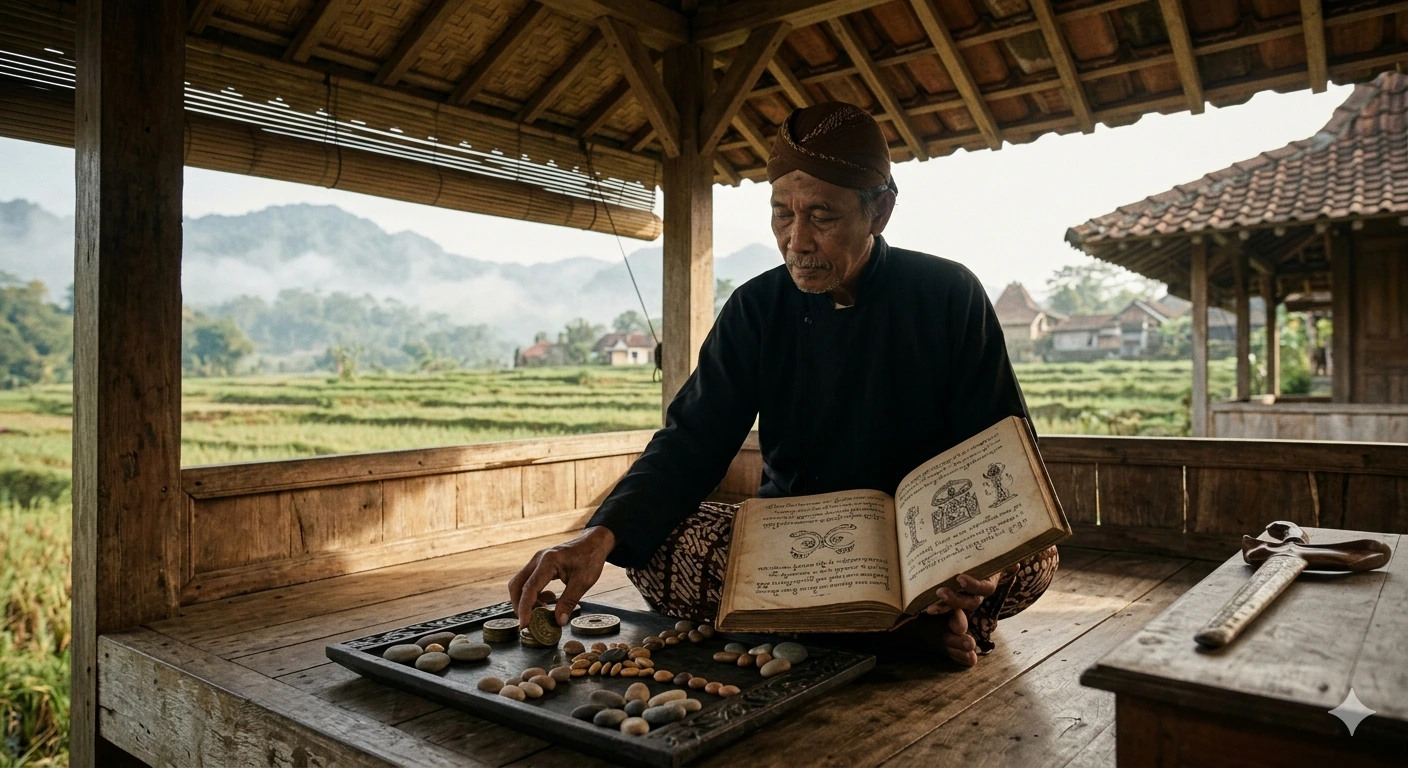
Ancient Javanese Secrets About Luck and Destiny
March 15, 2026
Is Luck Random?
Most modern people treat luck as random chance — things happen, or they don't. But Javanese philosophical tradition takes a different view. In the Javanese understanding, what we experience as luck is far more connected to alignment — with time, with effort, with inner character, and with what might be called cosmic flow.
Wahyu: The Concept of Divine Grace
One of the most significant concepts in Javanese spiritual tradition is wahyu — often translated as divine grace or sacred blessing. Wahyu is understood as something that descends upon a person who has cultivated the right inner qualities: honesty (jujur), patience (sabar), and sincere effort (tekun).
In Javanese legends and court tradition, wahyu was depicted literally as a glowing light that sought worthy recipients. Philosophically, it teaches that blessings are not arbitrary — they flow toward those who prepare themselves through character and conduct.
Ilmu Titen: The Science of Pattern
Perhaps the most practically powerful Javanese concept for understanding luck is ilmu titen — the art of careful, attentive observation accumulated over time.
Our ancestors were skilled observers. They noticed which days felt favorable for certain activities, which personality types attracted success in certain fields, which seasonal patterns affected health and harvests. This accumulated observation became encoded in primbon.
Ilmu titen teaches that what looks like luck from the outside is often the result of deep pattern awareness. Knowing when to act, how to prepare, and what to be alert to is not magic — it is intelligence born from sustained attention.
Pusaka and Inherited Blessing
Another dimension of Javanese luck involves pusaka — sacred heirlooms passed down through generations. Pusaka are valued not primarily for material worth, but because they are understood to carry the accumulated virtue and intention of ancestors.
To inherit pusaka is to receive a kind of spiritual support — an inheritance of blessings earned through generations of effort. This reflects the Javanese view that destiny is never entirely individual; it is woven from the threads of those who came before.
Working With Destiny
Javanese philosophy does not ask: did I get lucky? It asks: did I align myself well?
This means nurturing your character through daily ethical choices, observing the patterns and cycles around you, honoring your relationships and ancestors, and acting at the right time — not rushing, not delaying unnecessarily.
Luck, in this tradition, is less something that happens to you and more something you cultivate — through how you live, what you notice, and who you choose to become.
Frequently Asked Questions
Does Javanese tradition believe in fate?
Yes, but not rigid fate. The concept of kodrat (divine order) coexists with the conviction that effort, character, and wisdom shape how that order unfolds in a person's life.
Is wahyu something anyone can receive?
In the traditional view, wahyu seeks those of worthy character — not those of status or wealth. Inner cultivation is the primary prerequisite.
How does weton relate to luck?
Weton helps identify a person's natural energetic tendencies, including tendencies toward certain kinds of opportunity. But weton is not destiny — effort, timing, and character remain essential.