When Nightmares Come: A Javanese Perspective on Disturbing Dreams
March 20, 2026
Nightmares in Javanese Tradition
The Javanese tradition holds that all dreams — including frightening ones — carry potential meaning. Nightmares are not seen as bad luck or spiritual attack by default. They are more often understood as signals: something in your life, your relationships, or your inner world is calling for attention.
Types of Disturbing Dreams and Their Meanings
Being Chased
In primbon, dreams of being chased often reflect avoidance in waking life. Something — a responsibility, an uncomfortable truth, a difficult conversation — is following you because you have not yet turned to face it.
Falling
Falling dreams in Javanese interpretation may signal instability in your circumstances or a sense of losing control in an important area. They often appear during transitions or periods of significant change.
Death Dreams
Dreaming of your own death or the death of someone you love is often deeply alarming. However, in Javanese tradition, death dreams more commonly symbolize transformation and ending — not literal death. Something is changing, and the old form must be released for the new to emerge.
Confrontation and Violence
Dreams involving confrontation often mirror unresolved tension in the dreamer's relationships. The face of the antagonist in the dream — whether familiar or unknown — may be worth reflecting upon.
Dark Places or Enclosed Spaces
Being trapped or lost in darkness often reflects feelings of confusion, spiritual disconnection, or a need to reconnect with one's sense of inner light.
What to Do After a Nightmare
Javanese tradition offers practical guidance after a disturbing dream. First, return your breath to calm — do not carry the dream's fear into your waking state. Then note any images or emotions that remain, asking what in your life they might reflect. If the dream was vivid or recurring, consider offering a quiet prayer or doing a small act of remembrance for ancestors. Finally, share the dream with someone you trust, especially an elder, if it continues to disturb you.
Gangguan and Protection
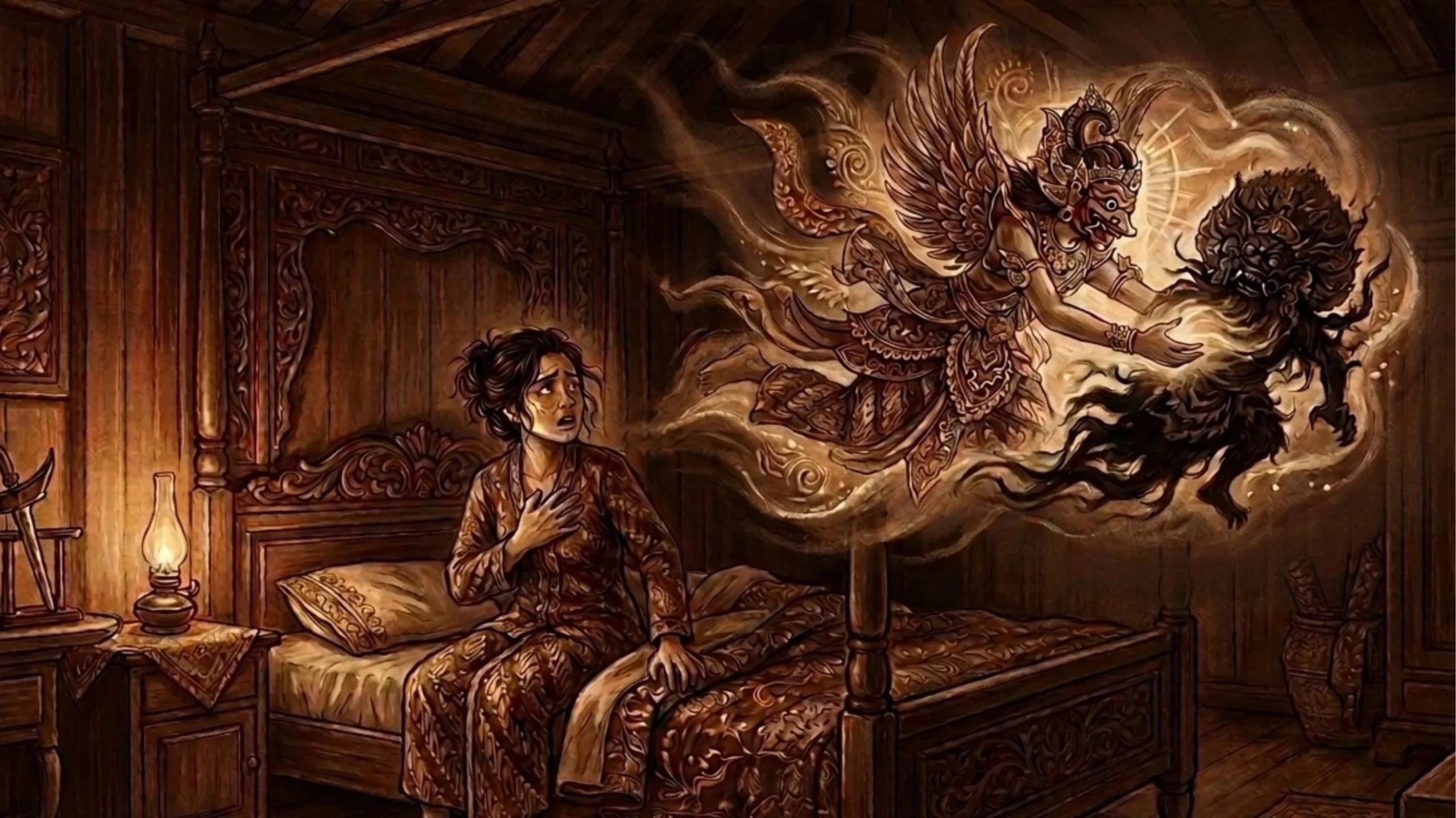
Some nightmares in Javanese tradition are attributed to gangguan — spiritual disturbance from external sources. These are believed to be more common at sensitive times: Kliwon nights, personal weton days, and transitions like pregnancy, illness, or mourning.
Protective practices in this context include recitation of prayers before sleep, keeping specific plants such as pandan or betel near the sleeping space, and maintaining clarity of intention and relationship.
Frequently Asked Questions
Are nightmares always meaningful?
Not every dream is a message. Stress, illness, and diet all affect dream content. The traditional guideline is: a dream that stays with you matters; a dream quickly forgotten may not.
Should I be afraid after a nightmare?
Fear is understandable but not necessary. In Javanese tradition, awareness and calm response are more appropriate than fear. Nightmares call for attention, not panic.
How do I know if a nightmare is gangguan or just stress?
This is a judgment call that traditionally belongs to an elder or spiritual teacher. If nightmares are frequent and disruptive, seeking trusted guidance is always appropriate.