Why Javanese People Still Choose Auspicious Days in the Modern Age
April 10, 2026
A Practice That Endures
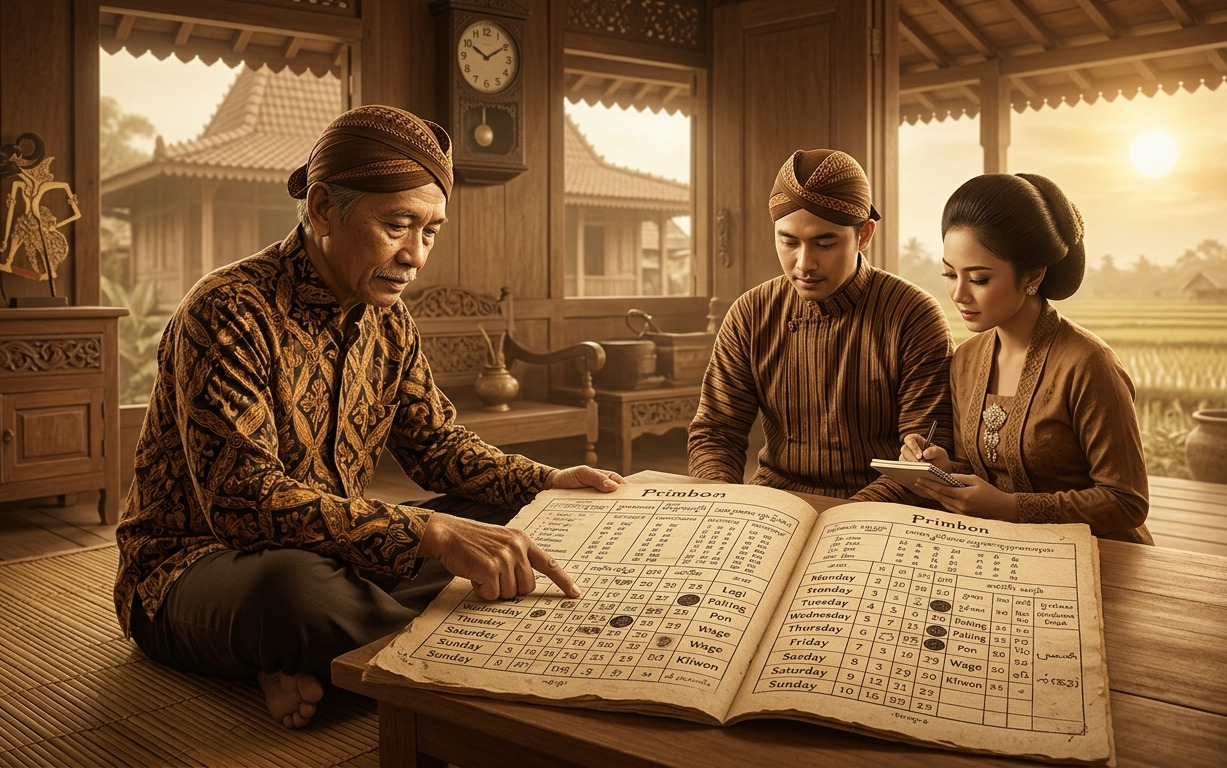
Walk into any traditional Javanese household planning a wedding or major event, and you will likely encounter the same conversation: a careful consultation of dates, weton combinations, and Javanese calendar cycles before any announcement is made. In an age of instant scheduling apps, this practice persists — and for good reasons that go beyond superstition.
The Social and Community Dimension
Choosing an auspicious day is not just a personal spiritual act — it is a social one. When a family announces a wedding date that has been carefully chosen through primbon consultation, they are communicating: we have taken this seriously, we have involved tradition and community wisdom, we are approaching this with care.
It signals respect — for the event, for the families involved, and for the community that will witness and celebrate it. This social function is itself valuable, independent of any spiritual belief.
Psychological Preparation and Commitment
When a date is chosen through careful deliberation — consulting calendars, speaking with elders, waiting for the right alignment — it creates a qualitatively different relationship with the event than simply picking a convenient date from a phone calendar.
The chosen date becomes more meaningful. The commitment to it runs deeper. The preparation is more thorough. The psychological effect of having chosen well creates confidence and intentionality.
Keeping Cultural Knowledge Alive
For younger generations, participating in hari baik selection is one of the primary ways they engage directly with primbon and Javanese calendar knowledge. By asking grandparents for their advice, consulting a family elder, or learning to use a Javanese calendar tool, young Javanese people stay connected to living cultural knowledge.
This transmission matters — not because every young person must believe in the system, but because cultural knowledge that is practiced stays alive, while knowledge that is only stored becomes a museum artifact.
How the Practice Has Adapted
Modern Javanese people have adapted hari baik selection in several ways. Digital weton calculators and Javanese calendar apps make the basics accessible to anyone. Consultation has moved from exclusive elder gatekeeping to broader family participation. And many people now use it as a starting point for scheduling rather than a hard requirement — identifying favorable date ranges and choosing the most practical option within them.
Frequently Asked Questions
Do all Javanese people still practice hari baik selection?
No. Practices vary widely by family, region, and religious background. But the practice remains widespread enough to be considered a living cultural tradition.
Is this practice in conflict with Islam?
This is a sensitive question with varied answers. Some Muslim scholars consider it incompatible with Islamic faith; others see it as cultural heritage distinct from religious practice. Individual families and communities navigate this differently.
Can non-Javanese people use the Javanese calendar?
Cultural tools are generally available to anyone with sincere interest and respectful engagement. The Javanese calendar system is accessible to all.