Ancestral Belief and Guardian Spirits Across Regional Traditions in Java
July 26, 2026
Across various regions in Java, belief in ancestors and guardian spirits can still be found today, though in differing forms and intensity. This belief remains an intriguing subject of cultural and anthropological study, as it shows how communities make sense of the relationship between humans, nature, and the unseen world.
The Roots of Ancestral Belief
Belief in ancestors in Java is rooted in animist traditions that existed long before the arrival of Hindu Buddhist and Islamic influence. In this worldview, deceased ancestors are believed to remain connected to the lives of their descendants, making the act of honoring them considered important for maintaining harmony in life.
What Are Guardian Spirits
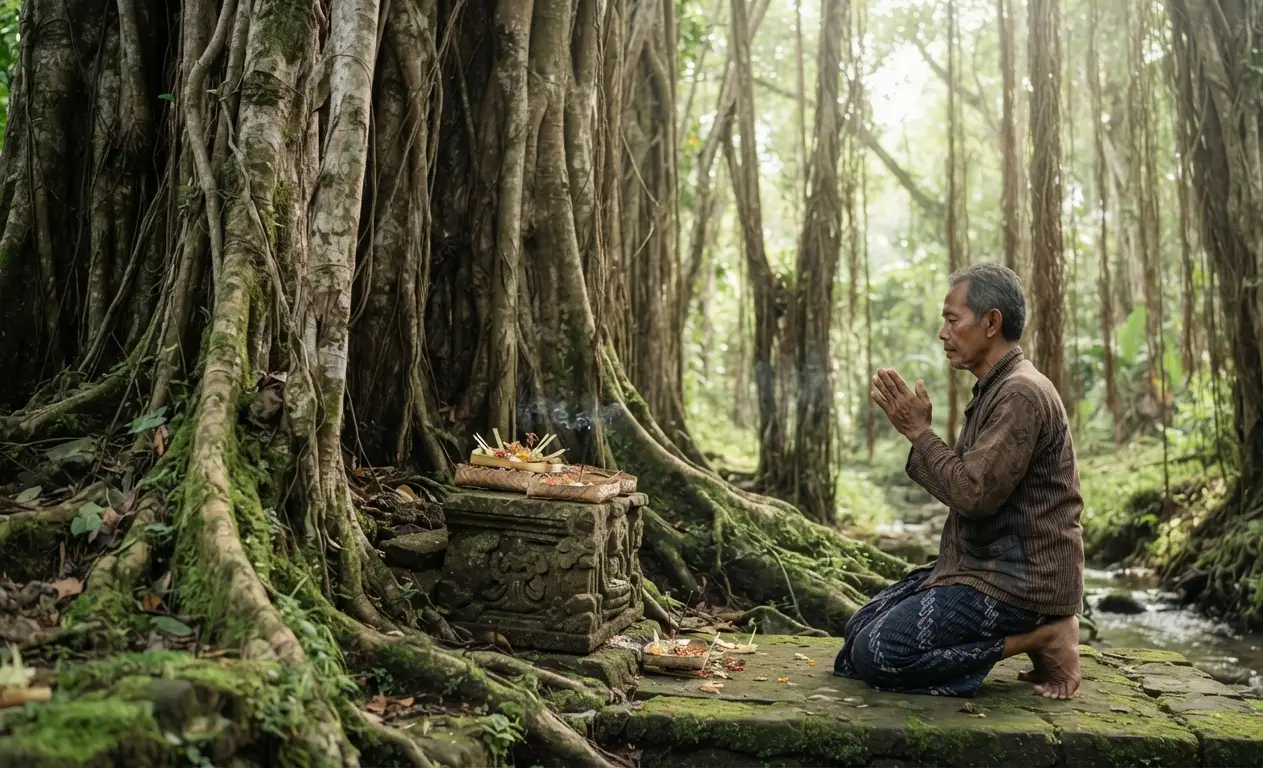
Beyond ancestors, many regions in Java also hold beliefs in guardian spirits, entities believed to watch over a specific place, such as a large tree, a water spring, or an area considered sacred. This belief often forms the basis of various local traditions, such as prohibitions against cutting down a certain tree or maintaining the cleanliness of an area regarded as sacred.
Real Expressions of This Belief in Tradition
Some real expressions of this belief can be seen in the tradition of leaving simple offerings at certain locations, holding prayers or small rituals before starting a major activity, or protecting a certain area from being disturbed without clear reason. This practice is often understood as a form of respect toward nature and ancestors, rather than purely fear of the supernatural.
An Anthropological Perspective on This Belief
From a cultural anthropology perspective, belief in ancestors and guardian spirits can be seen as a social mechanism that helps communities preserve nature and maintain social order. Prohibitions arising from this belief, such as protecting forests or water sources, indirectly function as a form of traditional environmental conservation passed down through cultural means.
How This Belief Has Survived to This Day
Although more modern communities increasingly hold to formal religion, belief in ancestors and guardian spirits still persists in many regions, particularly as a cultural tradition practiced alongside religious practice. This shows how local belief can continue to live on even as times keep changing.
Frequently Asked Questions
What is ancestral belief in Javanese culture?
This belief refers to the conviction that deceased ancestors remain connected to the lives of their descendants, making the act of honoring them considered important.
What are guardian spirits in local Javanese belief?
Guardian spirits are entities believed to watch over a specific place, such as a large tree or a water spring, regarded as sacred by the local community.
Does this belief come from a specific religion?
No. This belief is rooted in local animist tradition that existed long before the arrival of major religions such as Hindu Buddhism and Islam in Java.
Is this belief still practiced today?
Yes, in some regions this belief is still practiced alongside formal religious practice, though its intensity varies depending on the area.
What is the social function of belief in guardian spirits?
From an anthropological perspective, this belief functions as a social mechanism that helps preserve nature and maintain order within the community.
Is this belief considered part of Kejawen?
Belief in ancestors and guardian spirits often intersects with Kejawen values, though historically it is rooted in an older animist tradition.
Are offerings within this belief always mystical in nature?
Not always. Many offering practices are understood more as a symbolic form of respect toward nature and ancestors, rather than purely mystical ritual.
How do formal religions view this belief?
Views can differ depending on each religion's teachings, so this topic is best approached as a cultural and historical phenomenon rather than a theological judgment of right or wrong.
Does this belief contribute to environmental preservation?
Yes, many prohibitions arising from this belief, such as protecting forests or water sources, indirectly function as a form of traditional environmental conservation.
Do younger generations still understand this belief?
Some still understand it, particularly those raised in communities with strong tradition, though many are becoming less familiar with it due to modern lifestyle changes.
Does this belief differ across regions in Java?
Yes, the form and intensity of this belief can vary depending on local tradition in each region, though the underlying concept tends to be similar.
Can this belief be studied academically?
Yes, this belief is a compelling subject within cultural anthropology and local community studies at various universities.
Does belief in guardian spirits still influence everyday community decisions?
In some regions, this belief still influences decisions such as restrictions on building in certain areas or maintaining the cleanliness of places considered sacred.
What is the best way to understand this belief objectively?
The best way is to study it from a cultural and anthropological perspective, allowing it to be understood as part of local tradition's richness without theological judgment of right or wrong.
Could this belief disappear in the future?
Its intensity may continue to decline with modernization, but documentation and cultural preservation efforts can help ensure this knowledge remains known to future generations.