Ilmu Petung Dino: How to Calculate an Auspicious Day
September 3, 2026
In Javanese tradition, determining an auspicious day is not a matter of guesswork or blindly following inherited habits. There is a structured method called ilmu petung dino, a systematic way of calculating whether a given date deserves to be called a "good day," based on the values of neptu, pasaran, and sometimes wuku. This knowledge sits within the broader system of petungan Jawa, but it specifically focuses on the calculation technique itself rather than the concept in general.
Many people have heard the term "auspicious day" in primbon, but not everyone knows how the numbers behind it are actually worked out. This article is written as a practical guide: step by step, starting from gathering neptu data, understanding the target figures used for different life events, adding the wuku layer for extra precision, and recognizing combinations that are best avoided. At the end, you will find a simplified walkthrough example you can follow yourself to see exactly how petung dino works in practice.
Understanding the Basic Flow of Petung Dino
Before diving into the technical steps, it helps to understand the overall flow of ilmu petung dino. At its core, the method works by converting a day and a pasaran into numbers (neptu), then adding or comparing those numbers according to a specific purpose. The closer the resulting sum matches a pattern considered favorable in primbon, the stronger the confidence that the date is suitable.
This is not a single formula that applies identically to everyone and every purpose. That is precisely where the complexity — and the richness — of ilmu petung dino lies: each type of event has its own calculation logic, even though the foundation remains the same, namely the neptu of the day and the pasaran. Below are the practical steps commonly used by elders and primbon practitioners when working out an auspicious day.
Step 1: Gathering the Neptu of the Day and Pasaran Involved
The first step is gathering the basic data, namely the neptu of the day (dina) in the seven-day Gregorian week and the neptu of the pasaran in the five-day Javanese cycle (Legi, Pahing, Pon, Wage, Kliwon). Every day and pasaran carries a fixed neptu value that is standard across Javanese tradition, and these values are the raw material for the entire calculation.
Usually, two sets of neptu are gathered at once: the neptu weton of the person concerned (for instance, someone's birth weton) and the neptu of the date being considered as a potential auspicious day. These two figures are later added, compared, or analyzed for their relationship, depending on the method being used. If you are not yet familiar with how to find a person's neptu weton, it is worth understanding that basic step first before moving on.
Step 2: Understanding the Target Neptu for Different Purposes
Once the neptu figures are gathered, the next step is understanding that every type of purpose has its own "target" neptu or combination pattern considered most harmonious. Broadly speaking, primbon recognizes several major categories of life events — weddings, building a house, starting a venture, traditional ceremonies, and selamatan gatherings among them — and each tends to favor a different kind of numerical balance.
As a general illustration, some events are considered suited to a total neptu that falls into an even, balanced range, while others actually favor an odd-numbered combination believed to carry a particular kind of energy. Not every combination suits every purpose, so it is important to match the target neptu to the type of event being planned rather than applying one formula to everything. This is where ilmu petung dino differs from simply adding numbers at random: it requires understanding the context of the event before deciding which neptu pattern to aim for.
Step 3: Adding Wuku for Extra Precision
For those who want a deeper calculation, the wuku element can be added as an extra layer of precision. Wuku is a 30-week cycle within the Javanese calendar, and each wuku carries its own character and symbolism believed to shape the finer nature of a day beyond what neptu and pasaran alone can capture.
Adding wuku to the calculation is usually done after a combination of neptu and pasaran has already been judged favorable, functioning as a kind of "second filter" to make sure no wuku character conflicts with the purpose of the event. For example, a date might have a generally good neptu, yet fall on a wuku that, in certain traditions, is considered less aligned with that type of event. Because of this, wuku is often treated as a supporting consideration rather than the main determinant in ilmu petung dino.
Step 4: Recognizing Unfavorable Combinations and How to Avoid Them
Beyond seeking favorable combinations, ilmu petung dino also teaches how to recognize combinations that are best avoided. Some common warning signs include neptu pairings that traditionally correspond to conflict or imbalance, as well as certain pasaran meetings whose characters are considered to clash with one another.
Avoiding them is conceptually simple, even if it takes patience in practice: if a calculation reveals an unfavorable combination, an alternative date within a still-relevant timeframe is usually sought instead. Some primbon practitioners also consider adjusting supporting elements, such as the direction or timing of the event, so that the effect of a less-than-ideal combination can be minimized without having to change the entire plan.
A Simple Example: Simulating the Calculation
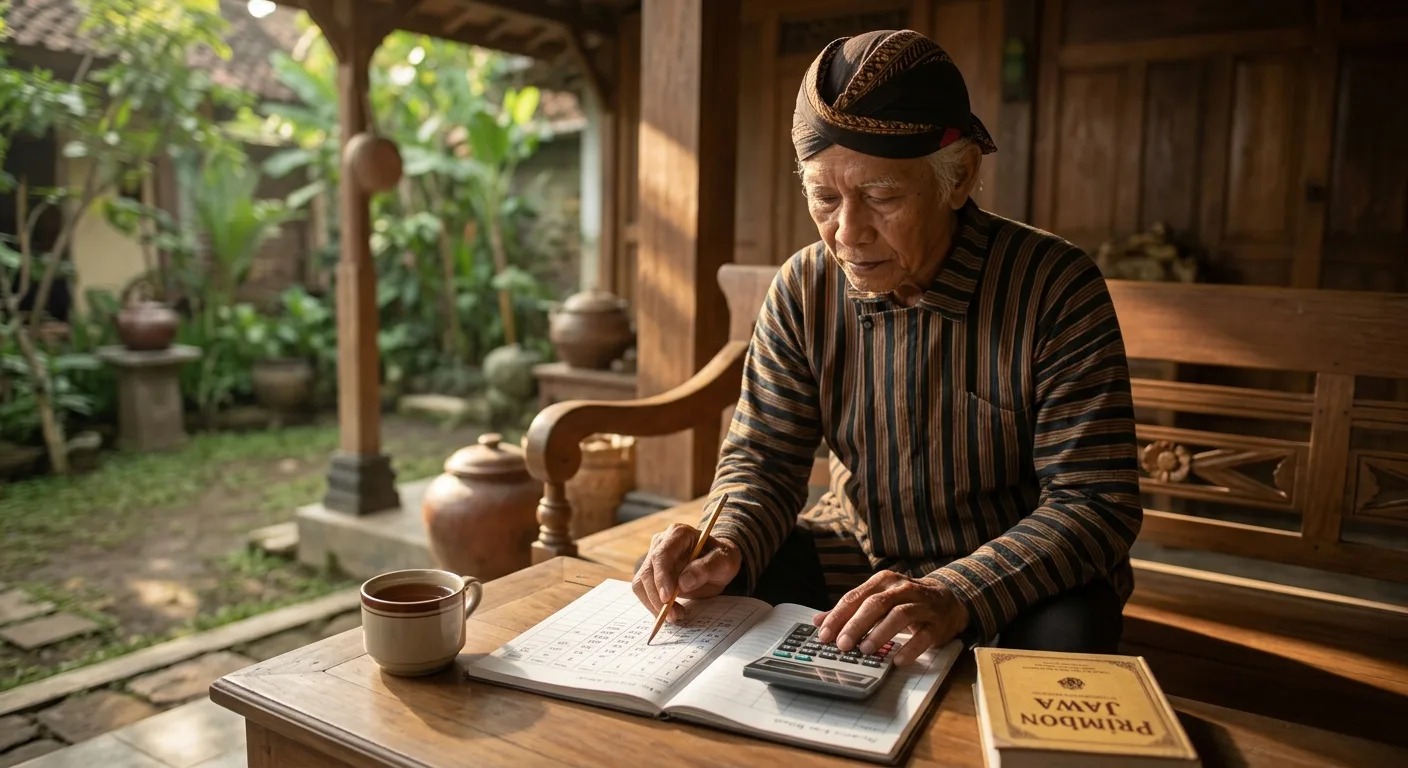
To make this easier to grasp, let's walk through a simplified illustrative example. Suppose someone wants to check whether a hypothetical date is suitable as an auspicious day for a particular event. First, they find the neptu of the day and pasaran for that date — say, a day with a neptu of 5 and a pasaran with a neptu of 8 — giving a combined total neptu of 13.
Next, this figure of 13 is compared against the target neptu considered appropriate for the type of event being planned. If the target range corresponds to a combination viewed as harmonious, the number is then checked to see whether it falls within that category or drifts toward a combination that should be avoided. As an additional step, the wuku of that date is also checked to confirm there is no clash of character. If every stage lines up favorably, only then is the date considered a genuinely auspicious day according to ilmu petung dino. This example is, of course, simplified, but it illustrates the real thought process: gather the data, compare it against the target, check the additional layer, then draw a conclusion.
FAQ
What is ilmu petung dino?
Ilmu petung dino is a calculation method within Javanese primbon used to determine whether a given day qualifies as auspicious, based on the neptu of the day, the pasaran, and sometimes the wuku.
What is the difference between petung dino and petungan Jawa in general?
Petungan Jawa is the umbrella term for the entire traditional Javanese calculation system, while petung dino refers specifically to the step-by-step technique of calculating an auspicious day.
Does everyone use the same formula?
Not always. The basic inputs (neptu of the day and pasaran) are the same, but the target number or pattern considered favorable can differ depending on the type of event being planned.
Is wuku mandatory in a petung dino calculation?
No, it is not mandatory, but wuku is often used as an additional layer of precision once a combination of neptu and pasaran is already judged favorable.
How do I find my own neptu for a day and pasaran?
The neptu of days and pasaran follow a standard table within the Javanese calendar, and are usually calculated from a birth date or from the date of the event under consideration.
Is the result of a petung dino calculation absolute?
Within Javanese tradition, the result of a petung dino calculation is generally seen as guidance or a consideration, not an absolute, unchangeable ruling.
What happens if a neptu combination turns out unfavorable?
An alternative date is usually sought, or certain supporting elements of the event are adjusted so the effect of the less-than-ideal combination can be minimized.
Is petung dino only used for weddings?
No. Petung dino is used for a wide range of purposes, such as building a house, starting a venture, traditional ceremonies, and other important events, each with its own possible target neptu.
Do I need a primbon expert to calculate this myself?
Not necessarily, since the basics can be learned independently, though for major events many people still consult elders or primbon experts for accuracy.
How do I make sure I don't miscalculate the neptu total?
The safest approach is to note the neptu of the day and the pasaran separately first, then add them step by step while double-checking each figure.
Is ilmu petung dino still relevant in modern times?
Yes, many Javanese communities today still use petung dino as an additional consideration before setting the date of an important event, alongside other practical factors.
Where does ilmu petung dino come from?
This knowledge developed as part of the broader petungan Jawa system, passed down through generations and woven into the Javanese calendar and primbon tradition as a whole.
Understanding ilmu petung dino means understanding how simple figures like the neptu of a day and a pasaran can be arranged into a meaningful consideration within Javanese life. For the broader history and concept behind this calculation system, see Understanding Petungan Jawa: The Traditional Calculation System of Ancestral Knowledge, or dig deeper into the basics of neptu figures in Neptu Weton: How to Calculate It and What It Means in Primbon Jawa, and see how it applies in another context in Auspicious Days for Moving House According to Traditional Javanese Almanacs.