The Grebeg Tradition at the Yogyakarta and Solo Palaces: Meaning and Sequence of Events
July 18, 2026
Grebeg is one of the palace traditions most widely known among the public, both in Yogyakarta and Solo. This event always draws attention because of its lively procession, especially when a mountain shaped offering of harvest goods is carried and distributed to the public.
What Is the Grebeg Tradition
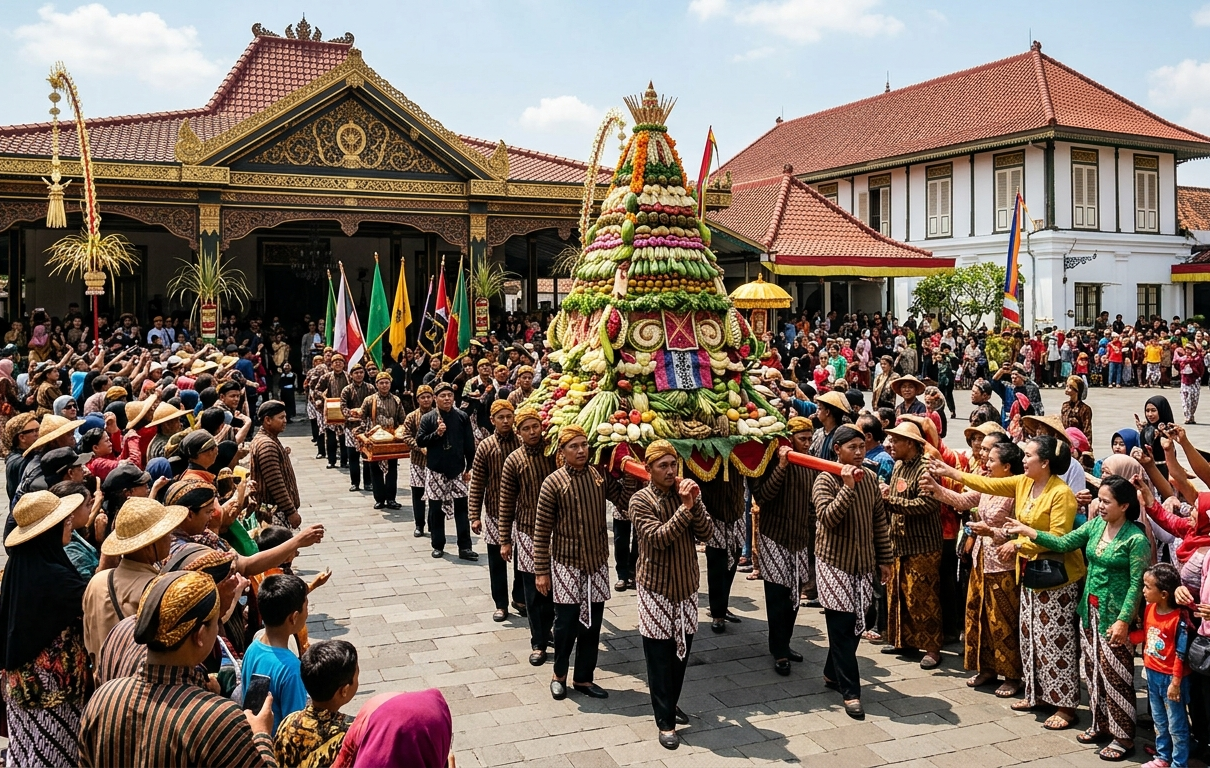
Grebeg is a palace ceremony usually held to mark a specific major occasion, characterized by a procession carrying a mountain shaped structure called gunungan, filled with harvest goods such as vegetables, fruits, and other agricultural produce. This gunungan is then distributed to the public in attendance, symbolizing the blessing and prosperity flowing from the palace to its people.
The Meaning Behind the Gunungan
The gunungan in the Grebeg tradition is far more than just a pile of harvest goods. Its towering shape symbolizes a mountain, representing fertility and prosperity, while its distribution to the public represents the hope that such blessings can be shared by all. Many people believe that receiving a part of the gunungan can bring a form of good fortune.
The Sequence of the Grebeg Event
The Grebeg event usually begins with prayers and a procession inside the palace, before the gunungan is carried outward to a designated location, such as the courtyard of a major mosque near the palace. Once the gunungan arrives at the location, a communal prayer is usually held before the public is allowed to take a part of the gunungan, an event that often unfolds with great enthusiasm and energy.
Differences Between Yogyakarta and Solo
Although the basic concept is the same, the way Grebeg is carried out at the Yogyakarta Palace and the Surakarta Palace differs slightly in procession details and timing. Even so, both maintain the core essence of this tradition as an expression of gratitude and shared prayer between the palace and the community.
Why This Tradition Is Still Preserved
The Grebeg tradition continues to be preserved today because it is seen as an important part of palace cultural identity, while also serving as a cultural tourism attraction that supports the local economy. Beyond that, this event also becomes a moment to strengthen the bond between the palace and communities that still honor ancestral tradition.
Frequently Asked Questions
What is the Grebeg tradition?
Grebeg is a palace ceremony marked by a procession carrying a mountain shaped structure of harvest goods, symbolizing blessing and prosperity shared with the public.
What does the gunungan symbolize in the Grebeg tradition?
The gunungan symbolizes fertility and prosperity, while its distribution to the public represents the hope that such blessings can be shared by all.
Where is the Grebeg tradition usually held?
This tradition is most widely known at the Yogyakarta Palace and the Surakarta Palace, though several other regions also hold similar traditions under different names and contexts.
Can the general public watch Grebeg?
Yes, the event is open to the public and typically draws many visitors eager to watch the procession or take part in collecting a portion of the gunungan.
What does the gunungan contain in the Grebeg tradition?
The gunungan usually contains harvest goods such as vegetables, fruits, and other agricultural produce, arranged into a towering mountain shape.
Why do people compete to grab a part of the gunungan?
Many people believe that receiving a part of the gunungan can bring good fortune or blessing to whoever obtains it.
Is Grebeg held only once a year?
Grebeg is generally held several times a year, usually coinciding with specific major occasions in the palace calendar.
Is there a difference between Grebeg in Yogyakarta and Solo?
There are slight differences in procession details and timing, though the core essence as an expression of gratitude remains the same at both palaces.
Does the Grebeg tradition carry a specific religious meaning?
This tradition blends cultural elements with shared prayer, so it can be understood religiously or culturally depending on each participant's perspective.
What is the historical origin of the Grebeg tradition?
This tradition is believed to have existed for a long time as part of palace ceremonial customs, continuously preserved and passed down through generations to this day.
Are foreign tourists allowed to watch the Grebeg tradition?
Yes, the event is open to anyone including foreign tourists, as long as respectful behavior is maintained in keeping with the atmosphere of the occasion.
Is there an entrance fee to watch the Grebeg tradition?
Generally, this tradition can be watched for free in public areas around the palace or along the procession route.
What is the difference between Grebeg and the heirloom procession on the first night of Suro?
Grebeg focuses on carrying a harvest mountain as a symbol of prosperity, while the heirloom procession emphasizes carrying sacred palace objects in a quiet and solemn atmosphere.
What is the best way for first time visitors to watch the Grebeg tradition?
It is recommended to arrive early to secure a good spot, and to follow the guidance of local organizers for comfort and safety throughout the event.
Does the Grebeg tradition contribute to local tourism?
Yes, this tradition serves as a fairly significant cultural tourism attraction, supporting the local economy around the palace area.