The Heirloom Procession on the Night of the First Suro at the Solo and Yogyakarta Palaces
July 5, 2026
One of the most anticipated traditions on the night of the first Suro is the heirloom procession, held regularly by two major Javanese palaces, the Surakarta Palace and the Yogyakarta Palace. This event always draws attention, both from local residents and visitors curious about the atmosphere surrounding the Javanese new year.
What Is the Heirloom Procession
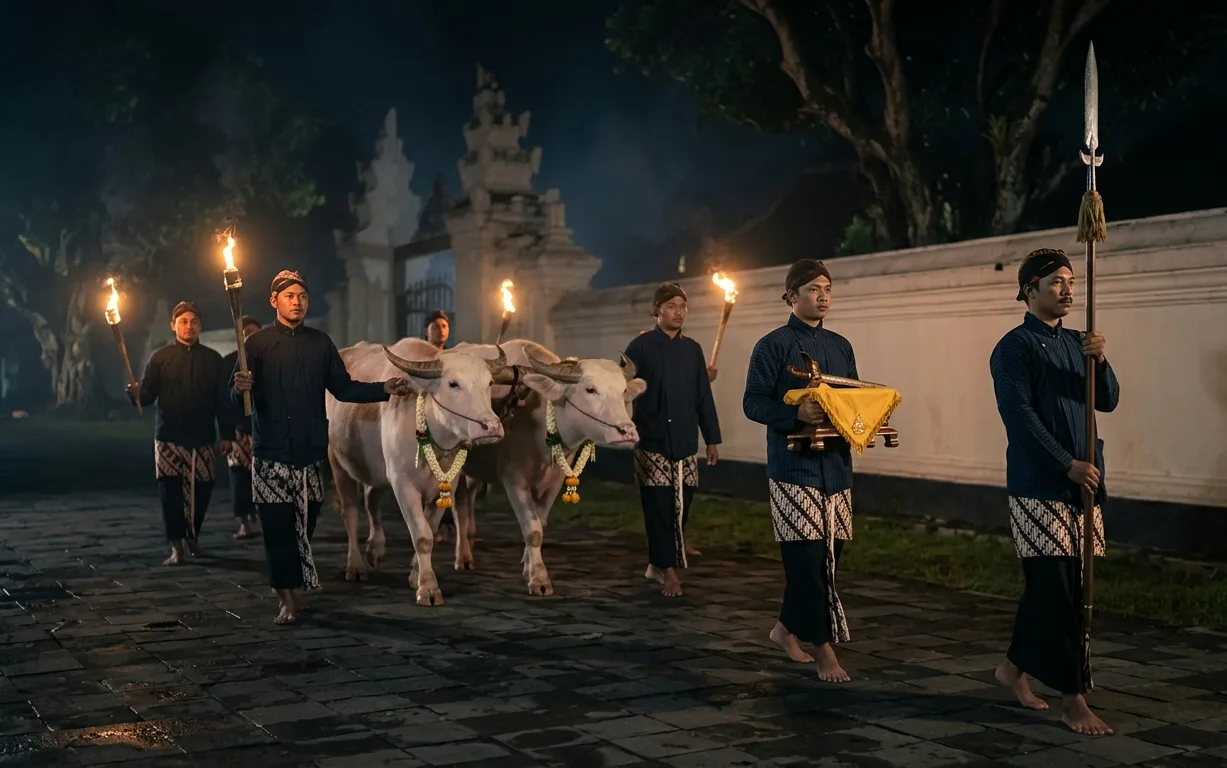
The heirloom procession involves carrying sacred palace objects, such as keris daggers, spears, and various other heirlooms considered sacred, in a walk around the palace grounds. This procession is typically carried out on foot, without footwear, and in a quiet atmosphere, as an expression of gratitude paired with a request for safety in the year ahead.
Differences Between the Solo and Yogyakarta Processions
Although both are held on the night of the first Suro, there are distinct differences between the two traditions. At the Surakarta Palace, the procession is usually led by an albino buffalo descended from Kiai Slamet, regarded as a living heirloom, and many visitors believe they can receive blessings by touching it or collecting its waste as fertilizer believed to bring fertility. Meanwhile, the procession at Yogyakarta Palace focuses more on a line of palace attendants carrying heirlooms around the fortress, without an animal, with a quieter and more solemn atmosphere.
The Meaning Behind the Procession
For those who understand its philosophy, the heirloom procession is far more than a simple parade. It symbolizes life's journey, one that must be walked with sincerity, calmness, and gratitude, while also serving as a reminder to maintain a good relationship with ancestors and the surrounding environment. Staying silent throughout the procession also carries symbolic meaning, encouraging participants to reflect more and speak less.
The Enthusiasm of the Public That Never Fades
Every year, thousands of people willingly push through crowds to witness this procession firsthand, both local residents and visitors from out of town. This moment is also often used by local governments to promote cultural tourism, making the heirloom procession not just a palace ritual, but also a cultural attraction that supports the local economy.
Frequently Asked Questions
Can the public watch the heirloom procession?
Yes. The heirloom processions in both Solo and Yogyakarta are open to the public and typically attract thousands of spectators who arrive well before the event begins.
Why are participants not allowed to speak during the procession?
Staying silent, known locally as tapa bisu, is considered a form of respect and a means of introspection, in line with the meaning of Suro as a time for reflection rather than celebration.
What makes the albino buffalo in Solo so special?
The albino buffalo is believed to be a descendant of Kiai Slamet, an animal regarded as a living heirloom with a long historical connection to the Surakarta Palace, which is why it always leads the procession.
Is this tradition found only in Solo and Yogyakarta?
The most widely known heirloom processions do come from these two palaces, although several other regions in Java also hold similar traditions on a different scale with their own local customs.
What kinds of heirlooms are typically carried in the procession?
The heirlooms usually carried include keris daggers, spears, and other palace relics believed to hold significant historical and spiritual value.
What time does the heirloom procession usually begin?
The procession usually begins close to midnight, timed to coincide with the turn of the day into the first of Suro, and continues until the early hours of the morning.
Are foreign tourists allowed to watch this event?
Yes. The event is open to anyone, including foreign tourists, as long as they maintain respectful behavior in keeping with the sacred atmosphere of the occasion.
Is there an entrance fee to watch the heirloom procession?
Generally, the heirloom procession can be watched for free in the public areas surrounding the palace, though certain spots may have specific access arrangements.
Is the heirloom procession held every year without exception?
Generally yes, it remains a fixed annual event, though in certain circumstances such as during a pandemic, its implementation may be adjusted or limited.
What is the historical origin of the heirloom procession tradition?
The tradition is believed to have originated from the palace custom of guarding and caring for heirlooms as symbols of power and spirituality, which later developed into an annual ritual welcoming the Javanese new year.
How does the heirloom procession differ from other cultural parades in Java?
The heirloom procession specifically focuses on carrying palace heirlooms in a sacred and quiet atmosphere, unlike general cultural parades which tend to be livelier and more open for entertainment.
Can the public join the main procession line directly?
The main procession line is usually reserved for palace attendants and officials, while the general public watches from designated areas along the route.
What does the albino buffalo mean to the people of Solo?
The albino buffalo is seen as a representation of a living heirloom carrying historical and spiritual value, so its presence in the procession is regarded as bringing its own form of blessing.
Does the heirloom procession carry a specific religious meaning?
The heirloom procession is more of a cultural tradition and a form of respect for ancestors, though in practice it is often accompanied by prayers that can align with each participant's own beliefs.
What is the best way for tourists to watch the heirloom procession?
It is recommended to arrive early to secure a good spot along the procession route, and to wear modest attire considering the sacred and solemn nature of the event.