Javanese Local Wisdom in Reading Signs of Nature
July 24, 2026
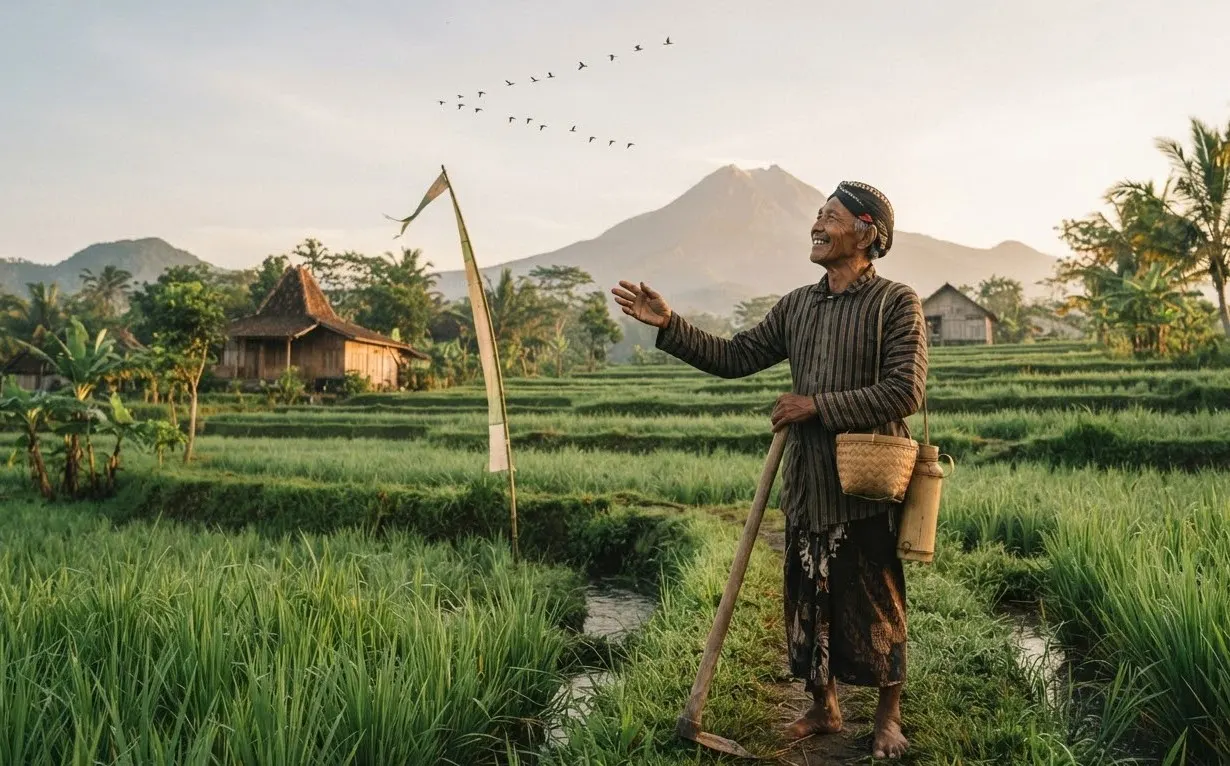
Long before modern weather forecasting technology developed, Javanese communities already had their own way of reading the signs of nature around them. This knowledge was passed down through generations and became an important part of daily life, especially for communities whose livelihoods depended on agriculture and the natural environment.
What Is Local Wisdom in Reading Nature
Local wisdom in this context refers to traditional knowledge developed through a community's long term observation of natural behavior, animals, and the surrounding environment. This knowledge is not merely myth, but the result of empirical observation passed down through generations as a practical guide for daily life.
Examples of Nature Signs Observed by Javanese Communities
Some well known examples of this local wisdom include observing the behavior of certain animals as an indicator of upcoming weather changes, watching wind direction and the color of the sky to predict rainfall, or noting the growth cycle of certain plants as a marker for the right time to begin planting. Knowledge like this has greatly helped agrarian communities plan their farming activities.
Local Wisdom as a Form of Mitigation
Beyond agricultural purposes, some of this local wisdom also functions as an early warning system for potential natural disasters. For instance, certain changes in animal behavior or environmental conditions are seen as warning signs, allowing communities to be better prepared for possible disasters such as floods or landslides.
The Relevance of Local Wisdom in Modern Times
Although modern technology is now far more accurate in predicting weather and disasters, this local wisdom still holds important value as a cultural knowledge heritage. Some studies even show that combining traditional knowledge with modern technology can produce more effective disaster mitigation results, especially in areas where access to technology remains limited.
The Importance of Preserving This Knowledge
Local wisdom like this needs to be continually documented and preserved, not only as part of cultural identity, but also as a source of knowledge that remains relevant in supporting community preparedness for environmental changes in the future.
Frequently Asked Questions
What is local wisdom in reading signs of nature?
This local wisdom is traditional knowledge developed through a community's long term observation of natural behavior and the surrounding environment, passed down through generations as a practical guide.
Is this local wisdom the same as mystical prediction?
No. This local wisdom is better understood as the result of empirical observation of nature by the community, not a mystical or baseless prediction.
What are some examples of nature signs Javanese communities often observe?
Some examples include the behavior of certain animals, changes in wind direction, the color of the sky, and plant growth cycles as indicators of weather conditions or planting time.
Is this local wisdom still used by modern communities?
Some of it is still used, especially in rural areas closely tied to agricultural activity, though its use today is often combined with modern technology.
How can this local wisdom help with disaster mitigation?
Certain signs of nature are believed to serve as early warnings of potential disasters, allowing communities to be more prepared and alert before a disaster actually occurs.
Is this local wisdom scientifically proven?
Some aspects of this local wisdom do align with scientific explanations, though not all of it has been studied in depth, so it should be understood as traditional knowledge that complements modern science.
Does this local wisdom only apply in Java?
Although the examples in this article focus on Javanese communities, similar local wisdom can also be found in various other regions of Indonesia with their own variations of knowledge.
How can this local wisdom be preserved so it is not lost?
The best way is to document this knowledge in writing or digitally, and to teach it to younger generations through both formal and informal education.
Can this local wisdom be combined with modern technology?
Yes, and some studies even show that combining both can produce more effective disaster mitigation systems, especially in areas with limited access to technology.
Who typically passes down this local wisdom?
This knowledge is usually passed down from older generations to younger ones through direct experience and oral storytelling in daily life.
Does this local wisdom only relate to weather?
Not only weather, local wisdom also covers knowledge about planting times, animal behavior, and signs of soil fertility in an agricultural context.
Do young people today still understand this local wisdom?
Some still understand it, particularly those raised in agrarian environments, though many are losing access to this knowledge due to urbanization.
Can local wisdom be used as material for scientific research?
Yes, and some researchers are indeed interested in studying local wisdom as an additional data source for understanding natural patterns in a region more comprehensively.
What is the best way to introduce this local wisdom to children?
The best way is through storytelling, outdoor activities, or direct visits to agricultural environments, allowing children to learn while experiencing the process firsthand.
Is this local wisdom considered part of Kejawen?
This local wisdom is better understood as general traditional knowledge of Javanese society, though in some contexts it can intersect with Kejawen values that emphasize harmony with nature.