Javanese Syncretism: How Different Beliefs Blended into Javanese Tradition
July 14, 2026
Looking closely at various Javanese traditions, from customary ceremonies to everyday beliefs, it becomes clear that many of them result from a blend of different cultural and religious influences. This phenomenon is known as syncretism, and it stands as one of the most distinctive traits of Javanese culture.
What Is Syncretism
Simply put, syncretism means the blending of different belief or cultural elements into something new, while still carrying traces of each original element. In the Javanese context, syncretism developed through a long history of interaction between local beliefs, Hindu Buddhist influence, and Islam, which arrived later.
How Syncretism Formed in Java
Before the arrival of Hindu Buddhism and Islam, Javanese society already held local beliefs rooted in animism and dynamism, honoring ancestral spirits and the forces of nature. When Hindu Buddhism arrived, many local concepts and rituals were absorbed into this new religious practice. A similar process occurred again as Islam developed in Java, where many old traditions were preserved but given new layers of meaning aligned with Islamic values.
Examples of Syncretism in Javanese Tradition
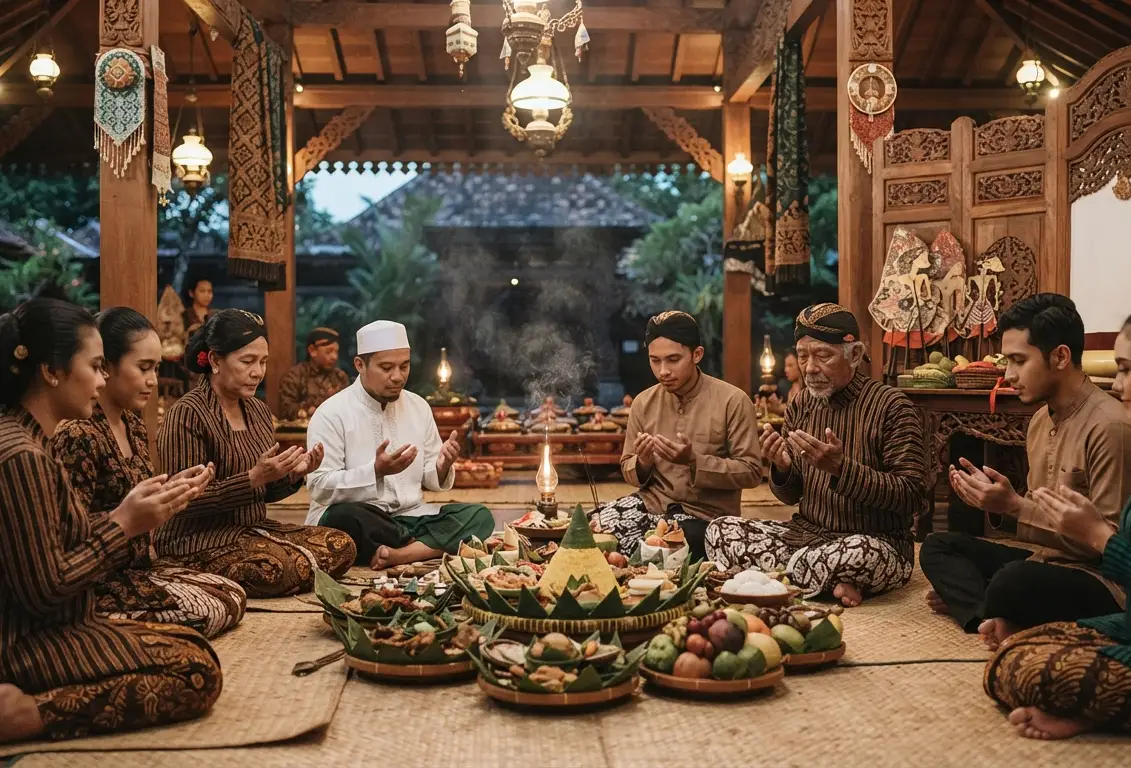
Several clear examples of syncretism can be seen in various customary ceremonies still practiced today, such as slametan, which blends prayer with a communal meal tradition, or various rituals that combine older symbols with newer religious values. Even in art forms like wayang puppetry, elements from different traditions blend into one distinctly Javanese narrative.
Why Understanding Syncretism Matters
Understanding syncretism helps us see Javanese culture not as something static, but as the result of a long process of adaptation and adjustment between different beliefs. It also explains why so many Javanese traditions feel unique, since they do not originate purely from a single cultural or religious source.
Frequently Asked Questions
What is Javanese syncretism?
Javanese syncretism is the process of blending local beliefs, Hindu Buddhism, and Islam, which together formed the unique Javanese cultural traditions still seen today.
Why did syncretism happen in Java?
Syncretism occurred due to the long history of interaction between different beliefs that arrived in Java over time, gradually influencing one another.
What are some real examples of syncretism in Javanese tradition?
Some examples include the slametan tradition, various customary rituals that combine old symbols with newer religious values, and wayang puppetry which blends multiple cultural elements together.
Does syncretism mean mixing religions carelessly?
No. Syncretism is better understood as a cultural process that occurred naturally through long term interaction between beliefs, not a deliberate or meaningless blending.
Does syncretism only occur in Java?
Syncretism as a phenomenon actually occurs in many cultures around the world, though in Indonesia, Javanese syncretism is one of the most widely recognized examples.
Does syncretism contradict formal religious teachings?
Views on this can differ depending on each person's religious perspective, so this topic is best approached as a cultural and historical phenomenon rather than a theological judgment of right or wrong.
Is Kejawen considered a result of syncretism?
Yes, Kejawen is often regarded as a clear example of Javanese syncretism, since its teachings emerged from the blending of various beliefs that once developed throughout Java.
How did syncretism influence Javanese art?
Syncretism led many Javanese art forms, such as wayang and traditional songs, to carry elements from various belief traditions, making them feel rich and layered with meaning.
Is slametan considered a form of syncretism?
Yes, slametan is often cited as an example of syncretism because it blends a communal meal tradition with prayers that can be adapted to each participant's own beliefs.
Is syncretism still developing today?
The process of cultural syncretism continues to occur naturally, though in different forms and contexts compared to the past, as society continues to evolve.
Do younger generations still understand the concept of Javanese syncretism?
Some still do, particularly those raised in culturally rich environments, though many others need to relearn it since the term is less familiar to them.
What is the benefit of studying Javanese syncretism for today's generation?
Studying syncretism helps people understand their own cultural roots more fully, while also cultivating an open minded view of blended beliefs as part of cultural richness.
Is there a risk of misunderstanding related to Javanese syncretism?
Yes, especially if discussed without proper context, so it is important to present syncretism as a historical cultural phenomenon rather than an invitation to blend beliefs carelessly.
What is the best way to understand Javanese syncretism objectively?
The best approach is to study it from a historical and cultural anthropology perspective, allowing for a fuller understanding without bias toward any single belief system.
Is Javanese syncretism connected to palace traditions?
Yes, many palace traditions also reflect syncretism, since palaces often served as meeting points for various cultural and religious influences throughout history.