Ruwatan Tradition as a Form of Warding Off Misfortune in Javanese Culture
July 28, 2026
Ruwatan is one of the Javanese traditions still practiced today, particularly as a way of requesting safety or warding off things considered unfavorable. This tradition carries a fairly deep cultural meaning, while also forming part of the rich oral tradition of Javanese society.
What Is the Ruwatan Tradition
Simply put, ruwatan can be understood as a ceremony of release from bad luck or misfortune believed to be attached to a particular person or situation. In Javanese belief, ruwatan is usually performed for children born under certain conditions considered in need of ruwatan, or for particular situations believed to carry unfavorable energy.
The Meaning Behind the Ruwatan Tradition
Ruwatan is not merely a formal ritual, but carries the hope that a person or community can avoid misfortune and live a calmer life. This tradition also reflects how Javanese society values the importance of balance between humans and the greater forces of the universe.
The Sequence of the Ruwatan Ceremony
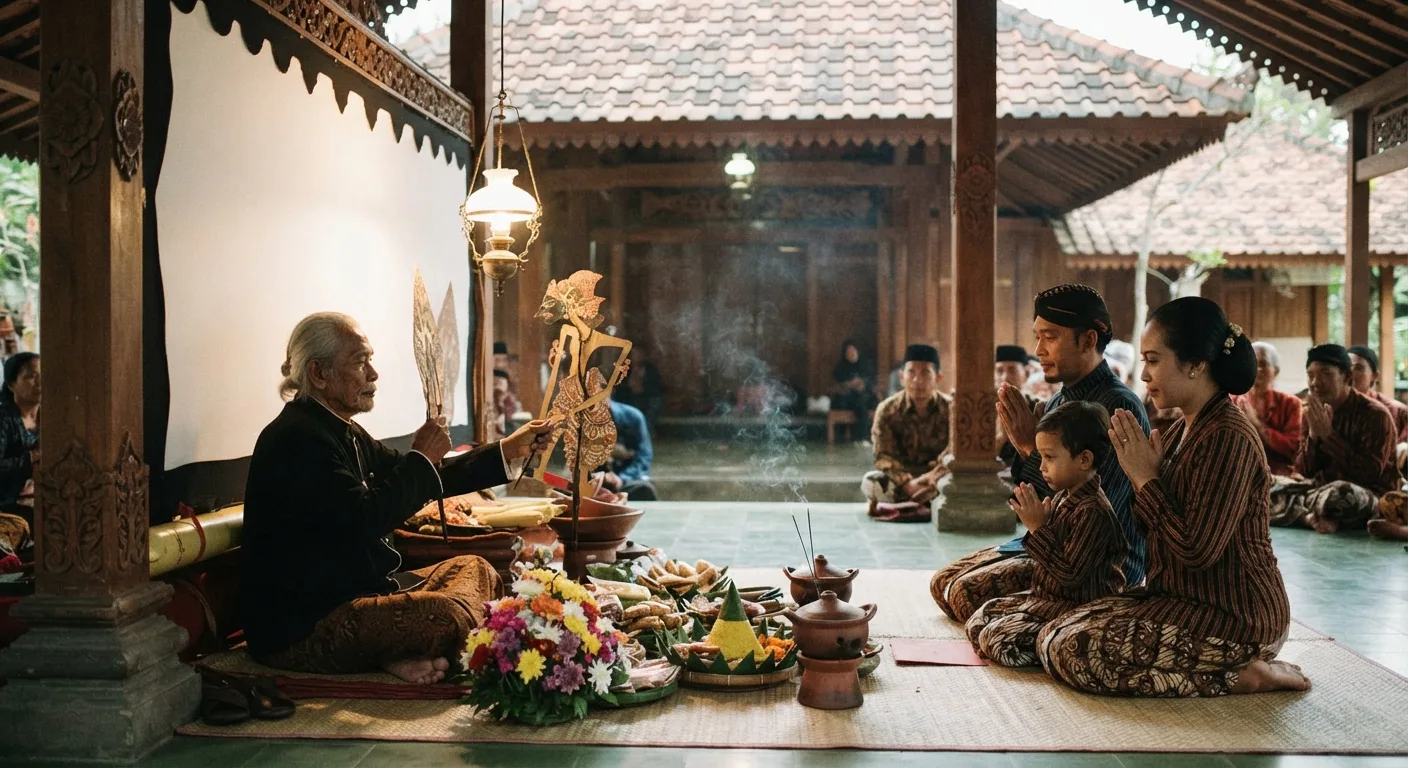
The ruwatan ceremony typically involves a shadow puppet performance with a specific story considered fitting for the purpose of the ruwatan, led by a puppeteer believed to understand the proper procedures of this ritual. Besides the puppet performance, there is usually a communal prayer and the preparation of simple offerings as part of the procession. Once the ceremony concludes, a shared meal is often held as a symbol of gratitude.
Who Typically Undergoes Ruwatan
In Javanese belief, there are certain birth conditions believed to require ruwatan, such as being an only child, a twin, or holding a specific birth order within the family. However, ruwatan can also be performed more broadly as a request for safety for individuals or communities without requiring any specific birth condition.
The Relevance of Ruwatan Today
Although not every family strictly practices this tradition, ruwatan continues to be preserved in various regions as part of cultural heritage, while also serving as a reminder of the importance of gratitude and good hope in living life, without needing to be understood rigidly as an absolute guarantee against life's problems.
Frequently Asked Questions
What is the ruwatan tradition?
Ruwatan is a Javanese customary ceremony believed to serve as a request for safety or a way of warding off things considered unfavorable.
Who typically undergoes ruwatan?
Certain birth conditions, such as being an only child or a twin, are believed to require ruwatan, though it can also be performed more generally as a request for safety.
What is typically performed during a ruwatan ceremony?
A ruwatan ceremony generally features a shadow puppet performance with a specific story, led by a puppeteer who understands the proper procedures of this ritual.
Is ruwatan mandatory for all Javanese families?
It is not mandatory. The decision to perform ruwatan depends on each family's own beliefs and traditions.
What is the main meaning behind the ruwatan tradition?
Its main meaning is the hope that a person or community can avoid misfortune and live a calmer, more balanced life.
Does ruwatan carry a specific religious element?
Ruwatan is more of a cultural tradition rooted in local belief, though its practice is often accompanied by prayers that can be adapted to each participant's own beliefs.
Is ruwatan still relevant for modern communities?
Some families still practice it as a form of cultural preservation, though many others interpret it more loosely without following every traditional requirement.
Can ruwatan be performed for a community rather than just an individual?
Yes. Ruwatan is also often performed on a community scale as a collective request for safety, particularly before or after a certain event.
Is ruwatan related to shadow puppetry?
Very much so, since a shadow puppet performance with a specific story forms an important part of the ruwatan ceremony sequence.
Is there a specific time to hold a ruwatan ceremony?
The timing can be adjusted to the needs of the family or community, though some traditions hold certain days believed to be more fitting according to traditional almanacs.
Does ruwatan guarantee someone will avoid all of life's problems?
No. Ruwatan should be understood as a form of hope and prayer, not an absolute guarantee that removes a person's responsibility to keep striving and remain careful in life.
Who leads the ruwatan procession?
The ruwatan procession is usually led by a puppeteer believed to understand the proper procedures and the fitting puppet story for the occasion.
Is ruwatan only practiced in Central Java and Yogyakarta?
This tradition is most widely known in the cultural regions of Central Java and Yogyakarta, though similar variations can also be found in other areas with Javanese cultural influence.
Do younger generations still understand the ruwatan tradition?
Some still understand it, particularly those raised in culturally rich environments, though many others need to relearn it since they are less familiar with this tradition.
What is the best way to understand the ruwatan tradition objectively?
The best way is to view it as part of the rich cultural and oral tradition of Javanese society, without interpreting it rigidly as an absolute guarantee of safety in life.