Javanese Ilmu Kebatinan: Understanding the Spiritual Teachings of the Ancestors
August 10, 2026
Within Javanese society lies a body of knowledge rarely taught in classrooms yet faithfully passed down through generations, known as ilmu kebatinan jawa. This teaching speaks to the deepest part of the self, the "batin," rather than to outward ritual alone. To outsiders, kebatinan can sound mysterious, and it is sometimes mistaken for mere mysticism or superstition.
Yet it is believed that ilmu kebatinan jawa is, at its heart, a path of inner cultivation aimed at shaping a person who is more aware, more at peace, and more attuned to life itself. This article explores the origin and meaning of ilmu kebatinan jawa, its core teachings, how it is traditionally learned, its relationship with formal religion, and why it still resonates in the modern world.
Origin and Meaning of Ilmu Kebatinan Jawa
The word "kebatinan" comes from "batin," a term in both Javanese and Indonesian that refers to the inner dimension of a person, the heart, consciousness, and the realm of thought that is not always visible to the eye. Ilmu kebatinan jawa, then, is a collection of teachings focused on cultivating that inner self rather than outward religious observance alone. According to tradition, its aims are self-mastery, refined intuition, inner peace, and closeness to the unseen realities that shape life.
Historically, ilmu kebatinan jawa is believed to have grown out of a long process of cultural blending on the island of Java. Pre-Islamic animist beliefs and Hindu-Buddhist mystical traditions eventually met the Sufi currents of Islam that arrived later. This blending is what produced a distinctly Javanese spiritual sensibility, one not rigidly bound to a single religion, even though many practitioners remain devout adherents of a formal faith, often Islam, alongside their kebatinan practice.
Core Teachings and Values in Kebatinan
Ilmu kebatinan jawa upholds a set of ethical values that its practitioners are encouraged to live by. Among them are rila (letting go with sincerity), narima (accepting with an open heart), and sabar (patience in the face of hardship). These three attitudes are believed to build a person's inner steadiness amid life's turbulence, so that one is not easily shaken by either praise or criticism. Alongside these sits the principle of eling lan waspada, meaning to always remember the Divine while remaining watchful and mindful in action.
One of the most profound philosophical concepts within ilmu kebatinan jawa is manunggaling kawula gusti, the idea of a mystical union between the servant and God. This is not understood literally as an equating of the self with the Divine, but rather as the pinnacle of spiritual awareness, a state in which a person has come to feel the Divine presence within every movement of the inner self. All of these values point toward a single overarching goal: self-mastery and an inner peace that does not depend on outward circumstances.
How Ilmu Kebatinan Is Traditionally Learned and Practiced
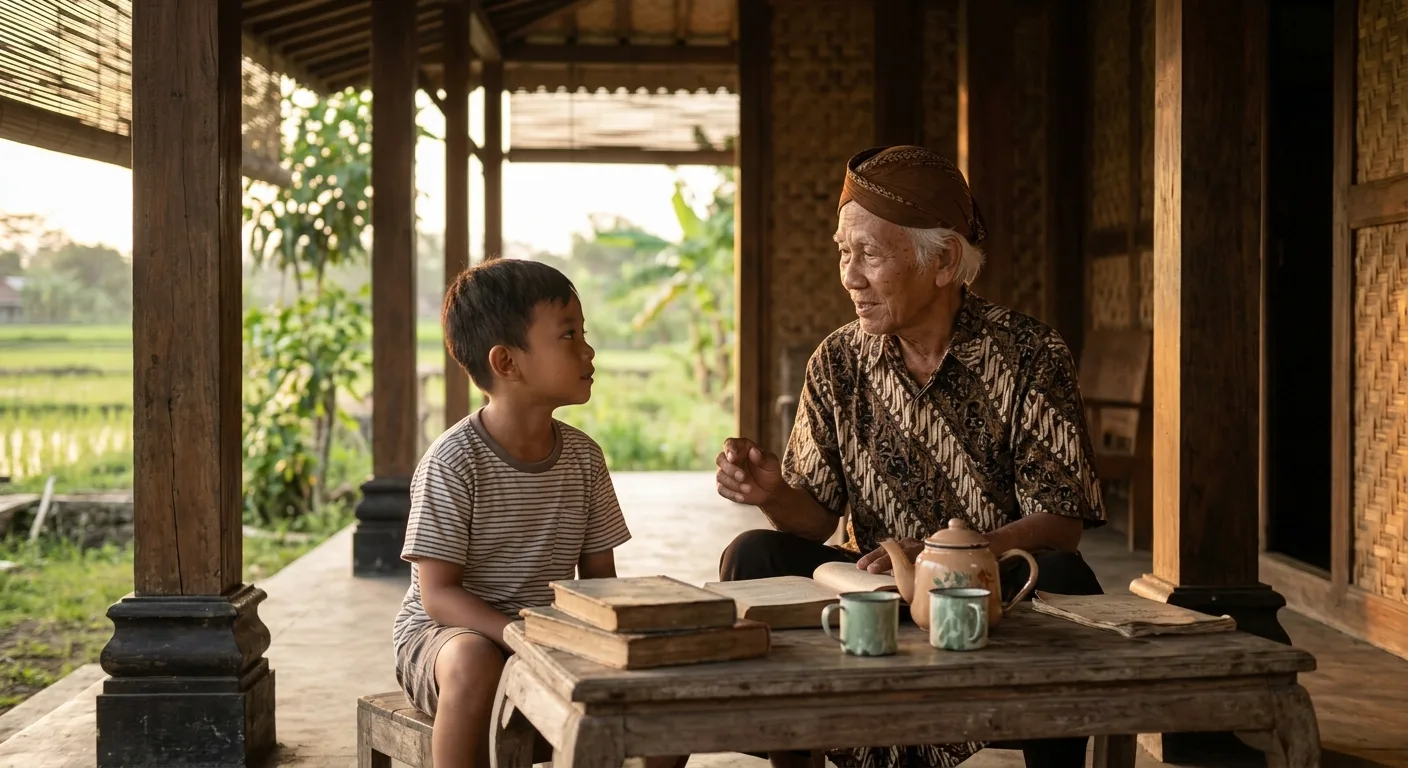
Unlike formal education delivered through books and classrooms, ilmu kebatinan jawa has traditionally been passed down orally, from a guru or spiritual elder to a student, or murid. This guru-murid relationship is personal and deeply intimate, often involving direct guidance in meditation, laku (spiritual disciplines such as laku prihatin), and gradual practice tailored to the student's inner readiness. The process is rarely quick; it demands patience and persistence sustained over time.
At the heart of this learning approach lies the concept of "ngelmu," knowledge that must be lived and embodied through actual practice rather than merely grasped intellectually. A student is believed to truly possess ngelmu only once the teaching has become inseparable from their everyday attitude and conduct. For this reason, meditation, ascetic discipline, and other forms of inner cultivation form an inseparable part of the learning process, valued far more highly than simply memorizing theory.
Its Relationship With Formal Religion
One common misunderstanding is the assumption that ilmu kebatinan jawa functions as a rival or replacement for formal religion. In practice, it is believed that kebatinan runs alongside a person's chosen faith rather than against it. Many practitioners continue to observe the obligations of their religion while treating kebatinan teachings as a way of deepening the inner dimension of that same religious life.
The blending of animist values, Hindu-Buddhist thought, and Islamic Sufism is precisely what makes ilmu kebatinan jawa syncretic in nature, gathering wisdom from multiple sources without needing to erase any one of them. In this view, formal religion provides the outer framework of law and worship, while kebatinan opens space for a more personal cultivation of inner feeling and spiritual awareness. The two are believed to complement one another rather than compete.
Relevance of Ilmu Kebatinan in Modern Life
In the modern era, ilmu kebatinan jawa is sometimes dismissed by outsiders as purely mystical or even superstitious. Yet many practitioners and scholars frame it instead as a path of ethical self-development, one that remains meaningful regardless of a person's formal religious affiliation. Values such as patience, humility, and self-awareness taught within kebatinan are seen as remaining relevant to the pressures of contemporary life.
In a fast-paced world full of distraction, the call to stay eling lan waspada, to remain mindful and watchful at all times, feels increasingly relevant rather than outdated. Many modern individuals are turning back toward meditation and inner-cultivation practices rooted in kebatinan as a way to find calm amid busyness. In this sense, ilmu kebatinan jawa is not merely a relic of the past but a living source of wisdom that can still be practiced today.
FAQ
What is ilmu kebatinan jawa?
Ilmu kebatinan jawa is a Javanese spiritual teaching centered on cultivating the batin, or inner self, focusing on self-mastery, inner peace, and refined intuition alongside outward religious practice.
Is ilmu kebatinan jawa a religion?
According to tradition, kebatinan is not a religion in itself but a spiritual path that runs alongside a person's formal religion.
Where does ilmu kebatinan jawa come from?
It is believed to have emerged from a long blending of pre-Islamic beliefs, Hindu-Buddhist mysticism, and Islamic Sufism across the island of Java.
What does the word "batin" mean?
"Batin" refers to the inner dimension of a person, the heart, consciousness, and inner thought, which is the central focus of kebatinan teachings.
What is manunggaling kawula gusti?
Manunggaling kawula gusti is a mystical concept describing the union of consciousness between the servant and God, seen as the highest point of spiritual realization in kebatinan.
What are the core values of ilmu kebatinan jawa?
Commonly cited core values include rila, narima, sabar, and eling lan waspada, which together are believed to build a person's inner steadiness.
How is ilmu kebatinan jawa traditionally learned?
Traditionally, it is learned orally from a guru to a student, through meditation guidance, spiritual discipline known as laku, and gradual practice over time.
What does "ngelmu" mean in the kebatinan tradition?
Ngelmu is knowledge that must be lived and embodied through real practice, rather than simply understood as theory or memorized information.
Do you need a guru to learn kebatinan?
Within this tradition, having a guru or spiritual elder is believed to be essential, since kebatinan teachings are usually transmitted through personal mentorship rather than self-study.
Does ilmu kebatinan jawa conflict with a person's religion?
Generally not. Many practitioners continue observing their formal religion while treating kebatinan as a way to deepen the inner side of that same faith.
Is ilmu kebatinan jawa still relevant today?
Yes, many view its values of patience, humility, and self-awareness as remaining relevant for coping with the pressures of modern life.
How does ilmu kebatinan jawa relate to Kejawen?
Ilmu kebatinan jawa is often regarded as the inner, spiritual core of Kejawen, representing the dimension of inner cultivation within the broader Kejawen worldview.
Ilmu kebatinan jawa teaches that the depth of a life is not measured only by what is visible on the outside, but by how one's inner self is cultivated and safeguarded over time. It reminds us that calm, awareness, and closeness to the Divine are an ongoing process rather than a destination reached once and then set aside. Read also What Is Kejawen? A Way of Life, Not Just Fortune Telling, or Rila, Narima, Sabar: Three Kejawen Attitudes for Living Well to deepen your understanding of these inner values within Javanese tradition.