The Javanese Philosophy of Memayu Hayuning Bawana: Preserving Balance in the World
August 14, 2026
Among the many wise sayings passed down through Javanese culture, memayu hayuning bawana stands out as one of the most frequently cited whenever people discuss the relationship between humans and nature. Far more than a poetic phrase, it reflects how Javanese ancestors understood humanity's place within a universe far greater than the individual self.
This article explores the literal meaning and origin of memayu hayuning bawana, how the teaching is often expanded into a broader, layered framework, how it has historically been expressed in daily life, its connection to the Javanese cosmological view of harmony, and why it continues to resonate with modern conversations about the environment.
Literal Meaning and Origin
Broken down word by word, memayu hayuning bawana reveals a rich layer of meaning. "Memayu" comes from the root word "ayu," meaning beautiful, and in this context refers to beautifying, tending to, or helping something flourish. "Hayuning" is closely related, carrying connotations of beauty, wellbeing, or safety. "Bawana" means the world or the universe. Put together, the phrase is commonly translated as "to preserve and beautify the harmony of the world."
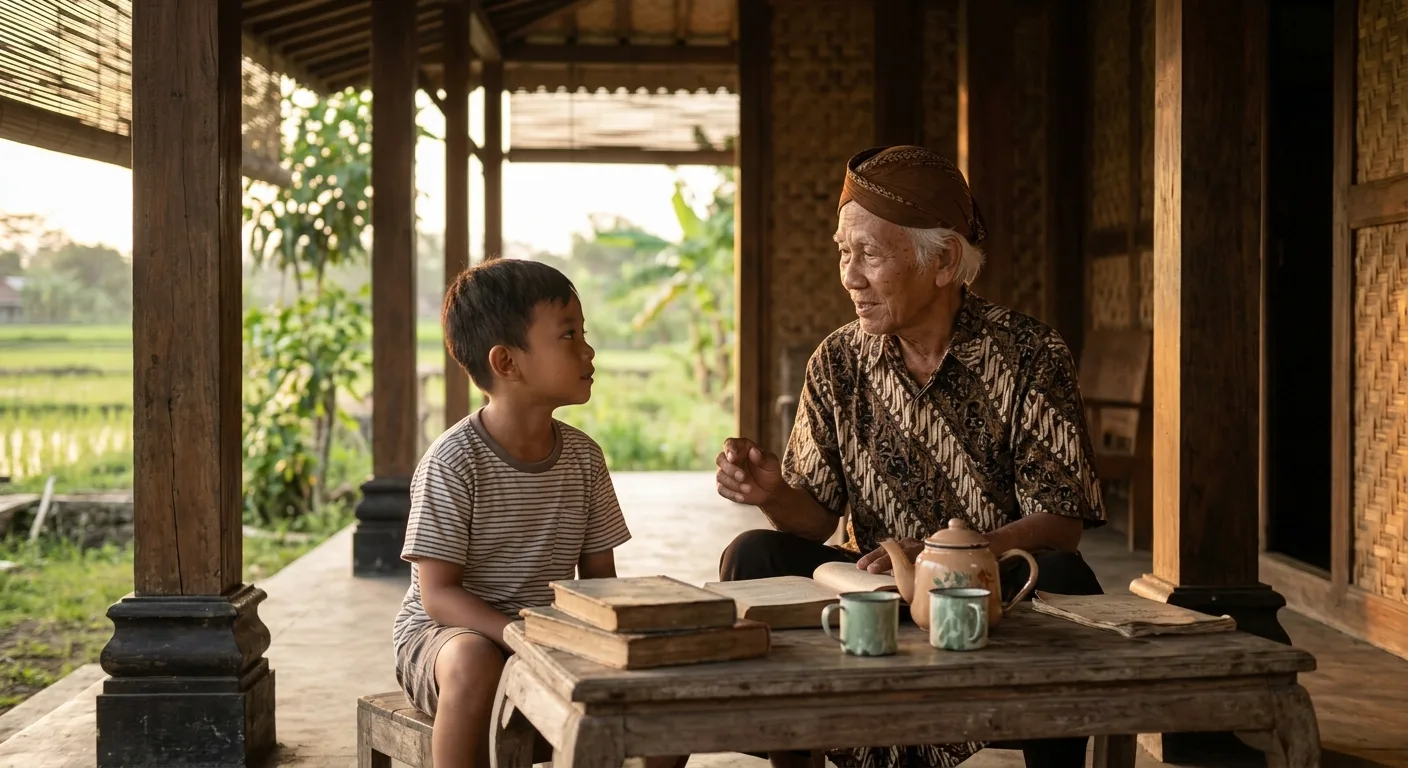
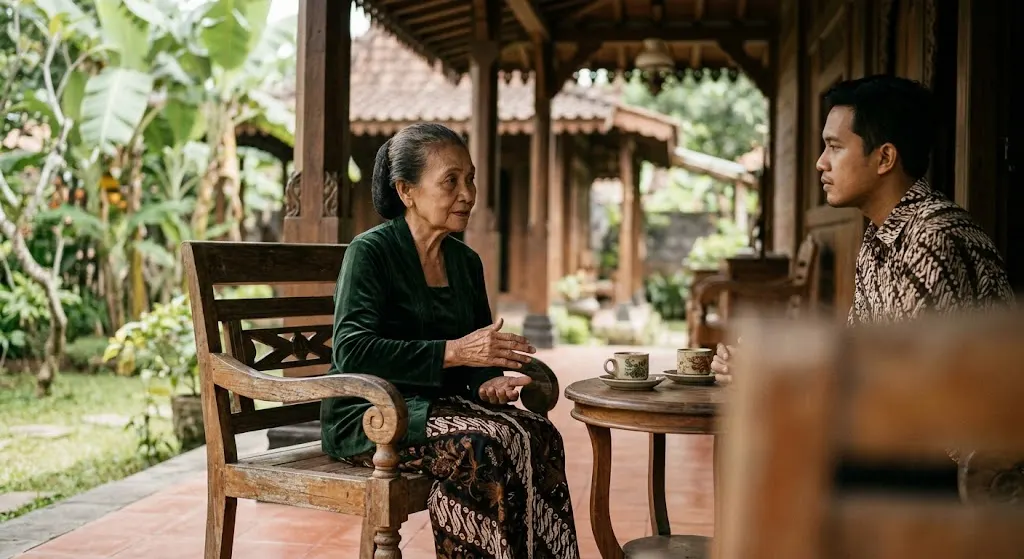
The expression is believed to have roots in Javanese oral tradition and philosophy that predate the modern era, and it continues to surface today in traditional speeches, Kejawen spiritual teachings, and the advice elders pass on to younger generations. Its core message is simple yet profound: human beings were not created merely to take from the world, but to carry an active responsibility for maintaining and protecting the balance of everything around them.
The Layered Teaching: World, Others, and Self
In some expanded interpretations, memayu hayuning bawana is presented as part of a broader, three-layered teaching. Certain sources describe it as memayu hayuning bawana (harmony with the world and the universe), memayu hayuning sesama (harmony among fellow human beings), and memayu hayuning salira or branata (harmony within oneself). Together, these three form a nested circle of responsibility, one that begins with self-discipline, extends outward into social relationships, and ultimately reaches humanity's relationship with the natural world.
It is worth noting that not every source presents this three-part breakdown with exactly the same wording, and the emphasis given to each layer can vary depending on the regional tradition or spiritual lineage passing it down. Even so, according to many interpretations, the underlying thread remains consistent across versions: harmony must be cultivated at every level, from the deeply personal to the vastly universal, and each level reinforces the others rather than standing apart.
Memayu Hayuning Bawana in Traditional Practice
This philosophy has never been merely an abstract idea; it has long been embodied in concrete customs within Javanese communities. One clear example is sedekah bumi, a communal expression of gratitude to the earth for its harvest and fertility, typically marked by shared prayers and the distribution of agricultural produce. This tradition offers a tangible way for communities to honor nature as something that sustains life, rather than treating it as a resource to be endlessly extracted.
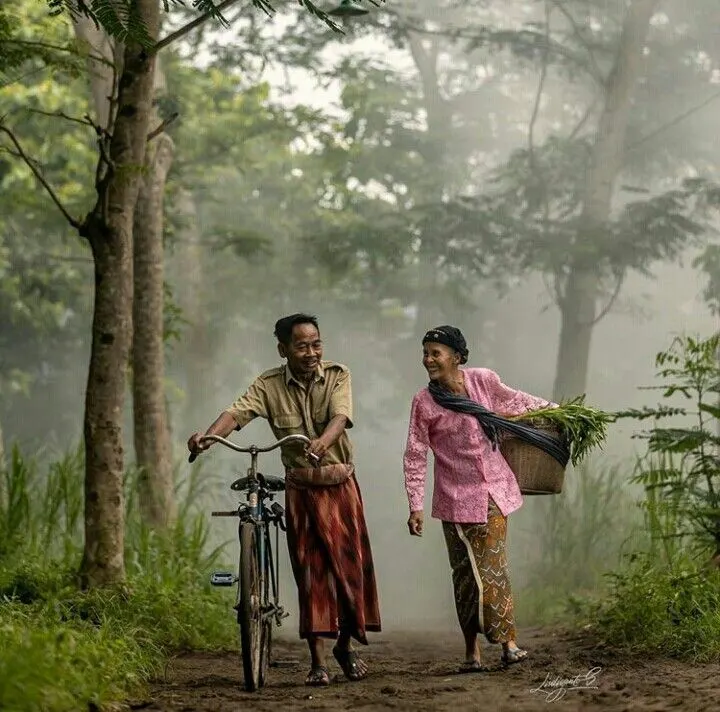
Beyond sedekah bumi, the spirit of memayu hayuning bawana also appears in the careful stewardship of land and water, such as traditional irrigation systems designed around fair and equal distribution, or customary restrictions against felling trees in areas regarded as sacred. Social norms in many Javanese communities have likewise, quietly but consistently, discouraged greed, excess, or actions likely to disturb the shared balance, whether in social life or in the surrounding environment.
Its Connection to Javanese Views on Nature and Harmony
Memayu hayuning bawana does not exist in isolation; it is part of a much larger Javanese cosmological worldview that sees humans, society, and nature as deeply interconnected. This outlook is often linked to the concept of "rukun," referring to harmonious, mutually protective social relations, which remains one of the core values shaping Javanese communal life to this day.
Within this worldview, nature is never seen as a passive, lifeless object, but as something alive and deserving of respect. Mountains, rivers, forests, and farmland are all regarded as carrying their own spiritual significance, so that damaging them is considered not merely a material loss but a disruption to a much larger balance. This perspective helps explain why so many traditional Javanese practices naturally align with the principle of environmental preservation.
Relevance to Modern Environmental Thinking
Amid growing global awareness of the climate crisis and environmental degradation, the philosophy of memayu hayuning bawana is increasingly cited in discussions of environmental ethics and sustainability. Its central message, that human flourishing depends on actively preserving balance rather than simply exploiting one's surroundings, resonates strongly with contemporary ideas around sustainable development.
Many communities and scholars now view local wisdom like memayu hayuning bawana as a genuinely relevant source of inspiration for environmental policy, not merely as a historical cultural artifact. It offers the perspective that caring for nature is not an optional add-on, but part of a moral responsibility woven into human life long before terms like "sustainability" ever became popular.
FAQ
What does memayu hayuning bawana mean?
It literally means to preserve and beautify the harmony of the world, reflecting humanity's responsibility to maintain balance within the universe.
What language does memayu hayuning bawana come from?
The phrase comes from Javanese, formed from "memayu" (to beautify or tend to), "hayuning" (beauty or wellbeing), and "bawana" (the world).
Is memayu hayuning bawana part of Kejawen teaching?
Yes, the phrase frequently appears within Kejawen spiritual teaching and broader Javanese philosophy of life, though it is also widely known outside that specific context.
What is the three-layered teaching within memayu hayuning bawana?
Some interpretations describe it as harmony with nature, harmony with fellow human beings, and harmony within oneself, though the exact wording can differ between sources.
Why is the self considered the starting point of harmony?
Because, according to many interpretations, a person who cannot maintain inner balance will struggle to build harmonious relationships with others or with the surrounding world.
How is memayu hayuning bawana practiced in daily life?
Through customs such as sedekah bumi, careful management of land and water, and social norms that discourage greed or environmentally destructive behavior.
What is the relationship between memayu hayuning bawana and sedekah bumi?
Sedekah bumi is one concrete expression of this philosophy, representing gratitude and respect toward nature for the harvest it provides.
Is this philosophy still relevant today?
Very much so, especially in discussions of environmental ethics and sustainability, since its message about preserving balance aligns closely with modern ecological thinking.
How does memayu hayuning bawana relate to the concept of rukun?
Both emphasize the importance of harmony; rukun focuses on harmonious social relations, while memayu hayuning bawana extends that harmony to include the natural world.
Do all Javanese people interpret this phrase the same way?
Not necessarily. The emphasis and specific wording can vary slightly depending on regional oral traditions or the spiritual context in which it is taught.
How does memayu hayuning bawana view nature?
Nature is viewed as alive and worthy of respect, rather than simply a resource that can be freely exploited without consideration.
Where is this philosophy commonly taught or passed down?
It is often shared through traditional speeches, spiritual teachings, oral advice from elders, and various communal cultural practices within Javanese society.
Memayu hayuning bawana teaches that preserving balance in the world is not optional, but part of a life-long responsibility that begins with the self, extends to others, and ultimately reaches the wider universe. This value continues to offer a perspective that feels remarkably relevant today, particularly amid growing global awareness of the need to protect the earth. Read also Sedekah Bumi: A Javanese Expression of Gratitude for the Earth, or What Is Kejawen? A Way of Life, Not Just Fortune Telling to explore more of the philosophical roots shaping Javanese life.