Tedhak Siten Tradition: The Meaning Behind the Javanese First-Steps Ceremony
August 16, 2026
In Javanese communities, every stage of a child's growth is traditionally accompanied by prayer and ritual involving the extended family. One tradition that continues to be practiced today is tedhak siten, a ceremony held when a baby's feet are ceremonially allowed to touch the earth for the very first time. Far more than a simple ritual, tedhak siten carries a deep philosophy about the journey of life from its earliest stages.
This article explores the origin and meaning of the tedhak siten tradition, the sequence of steps that make up the ceremony, the symbolism behind each ritual element, and its relevance in modern life. By understanding this tradition, readers can see how Javanese society views a child's growth as an event worth celebrating together as a community.
Origin and Meaning of Tedhak Siten
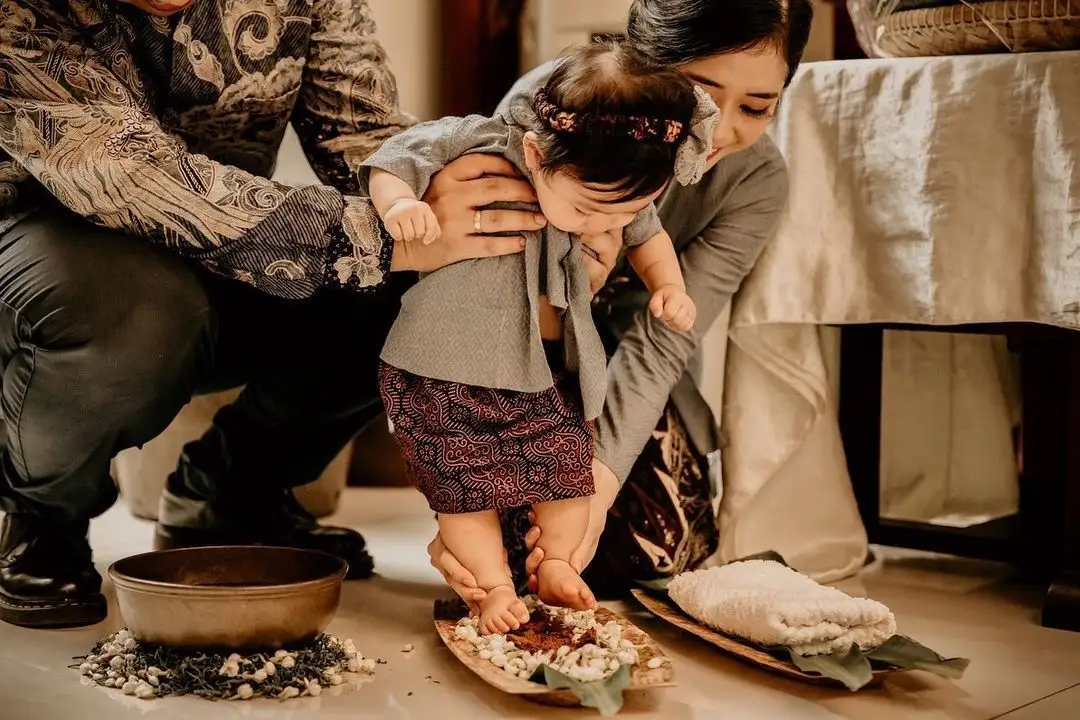
The term tedhak siten comes from two Javanese words: "tedhak," meaning to step down or descend, and "siti" or "siten," meaning earth or soil. Literally, tedhak siten can be translated as "stepping onto the earth," referring to the moment when a baby's feet are symbolically permitted to touch the ground for the first time. The tradition is also known as tedhak siti or the "turun tanah" (down to earth) ceremony, and it is typically held when a baby is around seven to eight months old, at the age when a child begins to show signs of standing or walking.
For Javanese communities, the earth is not merely a physical surface to stand on, but a symbol of real life with all its challenges. The ceremony serves as a kind of introduction for the child to the wider world beyond the arms of their parents. Tedhak siten is also an expression of gratitude for a healthy, growing child, as well as a collective prayer that the child will grow into a strong, independent, and good-natured person as they journey through life.
Walking Across the Seven-Colored Rice
The first stage of the tedhak siten ceremony involves the baby walking across jadah or ketan (sticky rice) that has been dyed in seven different colors. These colored rice cakes are arranged in a row, and the baby is guided by a parent or family elder to step across them one by one. The seven colors are not chosen arbitrarily; each hue is believed to represent the varied "colors" of life the child will encounter, from joy and sorrow to the many different challenges present at each stage of their journey.
Through this symbolic act, parents hope their child will grow up able to face life's many obstacles with patience and wisdom, just as they step steadily across the colorful rice cakes. The ritual also carries the lesson that life is never monotonous, but full of color that must be faced one step at a time, much like the sequence of footsteps across the row of jadah.
Climbing the Sugar Cane Ladder
After crossing the seven-colored rice, the baby is next helped to climb a small ladder made from stalks of sugar cane, commonly called tangga tebu or tangga arén. The ladder is usually propped against a post or held by an adult while the baby is guided to "climb" it step by step. Sugar cane is chosen deliberately, since in Javanese the word for sugar cane, tebu, is linked to the phrase "antebing kalbu," meaning steadiness of heart, while also symbolizing sweetness in life.
The symbolism of climbing the sugar cane ladder reflects the hope that the child will move forward in life with steady, deliberate steps rather than rushing ahead carelessly. At the same time, the sweetness of the sugar cane serves as a prayer that the child's life will always be filled with good fortune, happiness, and other sweet blessings. This stage is often one of the most anticipated moments of the ceremony, as it represents the child's gradual "ascent" toward greater maturity.
The Chicken Cage and Its Symbolic Objects
The next stage, and one of the most eagerly awaited, involves placing the baby inside a kurungan ayam, a bamboo chicken coop that has been decorated to look festive and cheerful. Inside the cage, various objects with symbolic meaning are placed, such as money, books, rice, small pieces of jewelry, or tools and instruments. The baby is then left to move freely inside the cage, while the family watches closely to see which object the child reaches for first.
According to Javanese belief, the object a baby chooses first is playfully taken as a hint toward the child's future interests, talents, or even profession. That said, this belief is understood more as a joyful family tradition that brings everyone together rather than a literal prediction to be taken at face value. This moment tends to be a highlight of the ceremony, as relatives gather around eagerly, guessing which object the baby will pick up.
Scattering Udik-Udik and the Closing Communal Meal
Once the ritual inside the chicken cage is complete, the ceremony continues with the scattering of udik-udik, a mixture of coins and yellow rice, sometimes accompanied by flower petals. This mixture is thrown for the children and neighbors present, who happily scramble to collect it. The act of scattering udik-udik symbolizes the family's generosity and the hope that the fortune and happiness received by the child will also be shared with, and felt by, the surrounding community.
The tedhak siten ceremony then closes with a selamatan, a communal meal shared among the extended family, neighbors, and relatives in attendance. During this closing meal, prayers are offered together for the child's safety, health, and good character, so that they may walk through life smoothly and with blessing. This shared closing reflects the strong spirit of gotong royong, or mutual cooperation, found in Javanese culture, where a child's happiness is regarded as a happiness shared by all.
The Communal Meaning of Tedhak Siten Today
Even as times change, the tedhak siten tradition continues to be widely preserved by Javanese families, both those living in their hometowns and those who have moved to major cities. Amid the individualistic pace of modern life, the ceremony remains a valuable occasion for gathering extended family and neighbors, while introducing the younger generation to the noble values of Javanese culture. Many families today hold tedhak siten with modern touches, such as professional photography and video documentation, without losing the essence of the original ritual.
More than just a ceremony, tedhak siten teaches that a child's growth is not merely a private matter for the immediate family, but something worth celebrating and praying over together with the wider community. It is this sense of togetherness that keeps the tedhak siten tradition relevant today, serving as a reminder that every small step a child takes is, in truth, a significant step for the entire family and community around them.
FAQ
What is the tedhak siten tradition?
Tedhak siten is a Javanese ceremony held to mark the moment a baby's feet are first allowed to touch the earth, typically when the baby is around seven to eight months old.
When is the right time to hold tedhak siten?
The ceremony is generally held when a baby is about seven to eight months old, around the time the child begins showing signs of wanting to stand or walk.
What does the term tedhak siten mean?
"Tedhak" means to step down, while "siti" or "siten" means earth, so tedhak siten literally translates as "stepping onto the earth."
What is another name for tedhak siten?
This tradition is also known as tedhak siti or the turun tanah (down to earth) ceremony in various regions across Java.
What does the seven-colored rice symbolize in this ceremony?
The seven-colored rice represents the many different "colors" of life the child will face, including joy, sorrow, and the various challenges encountered throughout their journey.
Why is a ladder made from sugar cane used?
Sugar cane is chosen because it is linked to the meaning of steadiness of heart and sweetness, symbolizing the hope that the child will move forward steadily and live a life full of happiness.
What is the purpose of the chicken cage in tedhak siten?
The chicken cage is used as a space where the baby is placed alongside various symbolic objects, so the family can see which one the child reaches for first as part of this joyful tradition.
Does the object a baby picks really determine their future?
According to Javanese belief, this is seen as a light-hearted hint about the child's interests or talents, but it is understood more as an enjoyable family tradition than a literal prediction.
What is udik-udik in the tedhak siten ceremony?
Udik-udik is a mixture of coins and yellow rice scattered for children and neighbors to collect, symbolizing generosity and shared happiness.
Is tedhak siten still practiced today?
Yes, many Javanese families continue to preserve this tradition today, sometimes with modern touches such as professional documentation and more contemporary decorations.
Is tedhak siten only held for baby boys?
No, the tradition applies to both baby boys and girls, as its main purpose is to mark this general stage of a child's growth and development.
What is the main message behind the tedhak siten tradition?
Its main message is that a child's growth is an event worth celebrating and praying over together, involving the extended family and the surrounding community.
Tedhak siten reflects how Javanese society views life as a journey full of color, challenge, and togetherness from the very earliest years. Through this meaningful sequence of rituals, families not only celebrate a child's growth but also pass down the noble values inherited across generations. Read also Sedekah Bumi: A Javanese Expression of Gratitude for the Earth, or What Is Kejawen? A Way of Life, Not Just Fortune Telling to deepen your understanding of Javanese life philosophy.