Bancakan Weton Tradition: A Simple Javanese Thanksgiving
August 28, 2026
Among Javanese communities, there is a tradition that may sound unfamiliar to outsiders yet remains alive in many households today: bancakan weton. Instead of celebrating a birthday once a year the way Western cultures do, Javanese families have their own way of giving thanks for a person's day of birth — repeated every 35 days, following the weton cycle of the Javanese calendar.
This tradition is simple, warm, and full of meaning. There is no big cake, no candles to blow out, and no formal guest list — only a small bowl of bancakan rice with modest side dishes, shared with neighbors and children around the house as an expression of gratitude. This article explores what bancakan weton really is, the philosophy behind it, how it is practiced day to day, and why it still matters in modern life.
What Is the Bancakan Weton Tradition?
Bancakan weton is a small, humble thanksgiving ritual held to mark the recurrence of a person's birth weton. In the Javanese calendar, a weton is formed by combining the seven-day week (Monday, Tuesday, and so on) with the five-day pasaran cycle (Legi, Pahing, Pon, Wage, Kliwon), producing a full cycle of 35 days. This means a person's birth weton returns every 35 days — far more often than an annual birthday.
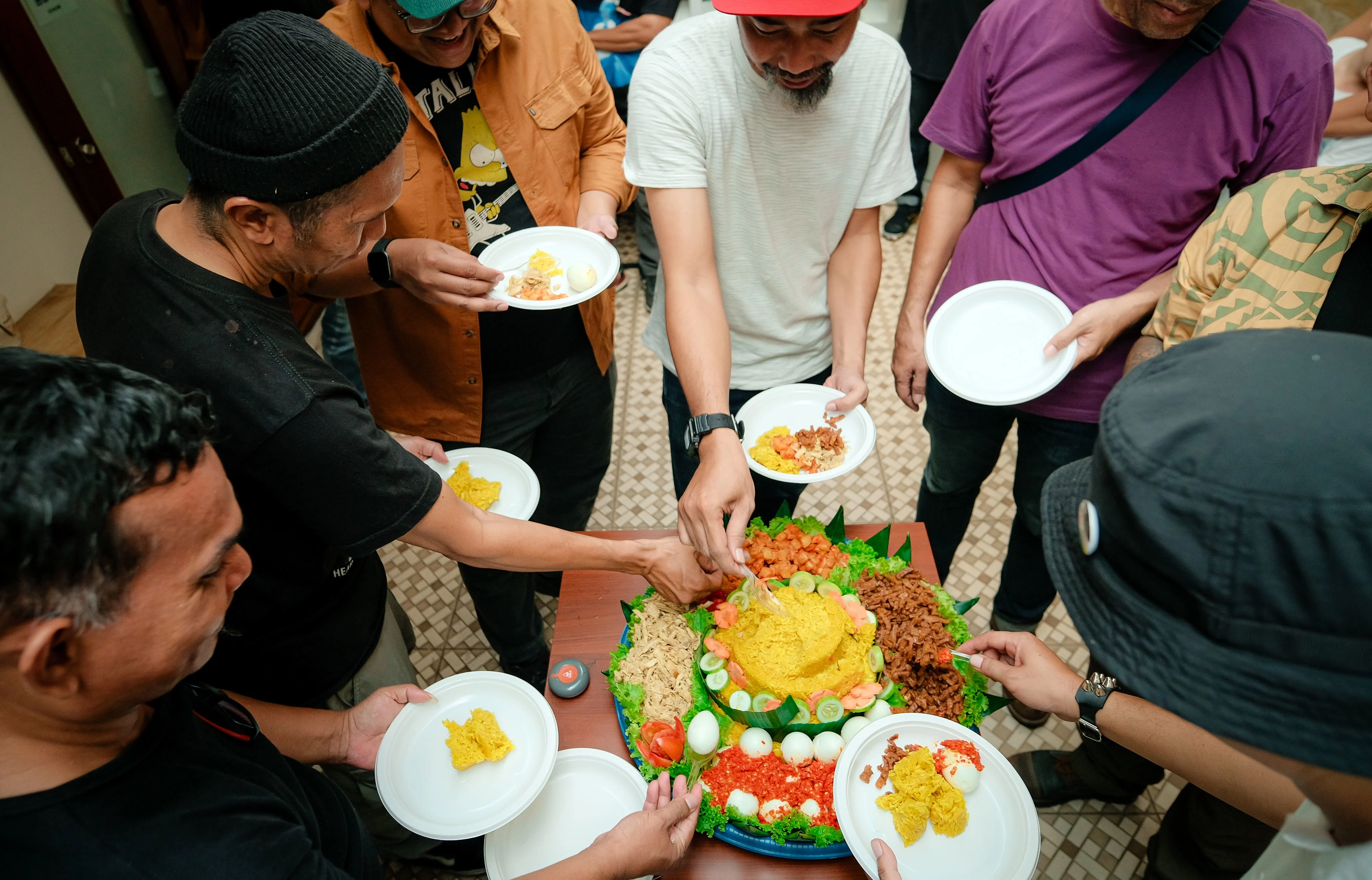
On that recurring day, families typically prepare bancakan: plain rice served with simple side dishes such as boiled eggs, tempeh, tofu, or urap vegetables, sometimes shaped into a small tumpeng cone. This food is then shared with neighborhood children who gather nearby, or delivered directly to nearby homes. Nothing about it is meant to impress; simplicity is precisely the point of the tradition.
How Bancakan Weton Differs from a Western Birthday Party
Although both mark a person's day of birth, bancakan weton differs from the Western birthday concept in several fundamental ways. The first is frequency: a Western birthday is celebrated once a year on the Gregorian calendar date, while bancakan weton recurs every 35 days, meaning it can happen roughly ten times within a single year.
The second difference lies in who the celebration centers on. A Western birthday tends to put the birthday person at the center — receiving gifts, being the focus of attention, with a party organized to please them. Bancakan weton works the other way around: it is not about the individual being celebrated, but about giving to others, especially children and neighbors. The third difference is spiritual framing. Bancakan weton is rooted in gratitude toward Gusti (God) for the safety and life given so far, rather than personal celebratory pleasure. There is no gift-giving culture here — instead, there is a culture of giving food as a form of sedekah, or charitable sharing.
The Philosophy Behind Bancakan Weton
Several layers of meaning underlie the bancakan weton tradition. The most central is syukur, or gratitude — an expression of thanks for the health, safety, and life granted from birth up to the return of that weton day. Every 35 days is seen as a fitting point to pause and revisit that sense of gratitude.
The second layer is sedekah, sharing sustenance and blessings with others, particularly children and nearby neighbors. In Javanese belief, sharing food, however small, is thought to bring blessing to both giver and receiver. The third layer is tolak bala, warding off misfortune. By giving alms on one's weton day, a person is believed to help protect themselves and their family from harm.
Finally, bancakan weton also functions as a kind of spiritual "reset point." Each time the weton comes around, a person is invited to reflect on their life's journey, renew their intentions, and begin the next 35-day cycle with a clearer heart.
How Bancakan Weton Is Practiced Day to Day
The practice of bancakan weton is generally very simple and requires no elaborate preparation. As the weton day approaches, a family prepares bancakan rice with whatever modest side dishes are on hand — sometimes just plain rice, egg, and a bit of vegetable. Some families add a short prayer or word of gratitude before the food is shared, echoing elements of a slametan, though on a far smaller scale.
Once ready, the bancakan rice is handed out to children playing nearby, close neighbors, or simply whoever happens to pass by. Some families instead deliver the food directly to neighboring houses as a gesture of respect and to strengthen social bonds. There is no formal invitation and no special decoration — everything unfolds naturally as part of the household's routine.
Some families carry out bancakan weton every time their child's weton comes around, especially during childhood, as part of a prayer for the child's safe growth. Others reserve it for particular occasions, such as when a weton falls close to a significant day or a pasaran considered especially meaningful.
Bancakan Weton and Slametan: Understanding the Difference
Many people conflate bancakan weton with slametan in general, though the two have distinct characters. Slametan is an umbrella term for various communal meal rituals in Javanese tradition, held for many purposes — moving house, pregnancy, death, or harvest. A slametan usually involves a more formal shared prayer, inviting neighbors or community elders to sit together, and takes place at specific moments that do not recur on a regular schedule.
Bancakan weton, by contrast, is specifically tied to the 35-day cycle of a person's birth. It is far simpler and more child-oriented — food is handed directly to children passing by or playing near the house, rather than through a formal communal meal. Because it recurs every 35 days, bancakan weton is also far more routine and personal compared to major slametan such as mitoni or tedhak siten, which are held only once in a lifetime at a particular milestone.
Interestingly, amid modernization, the bancakan weton tradition has not disappeared entirely. In many Javanese villages, families who still hold firmly to ancestral customs continue to practice it consistently. Even some younger people raised in cities have begun taking a renewed interest in reviving the tradition as a way of reconnecting with their cultural roots, albeit in a simpler and more flexible form suited to modern life.
FAQ
What is bancakan weton?
Bancakan weton is a simple Javanese thanksgiving tradition held whenever a person's birth weton recurs, usually consisting of rice and simple side dishes shared with neighbors and children.
How often does a person's weton recur?
A weton recurs every 35 days, the result of combining the seven-day week with the five-day pasaran cycle in the Javanese calendar.
How is bancakan weton different from a Western birthday?
A Western birthday is celebrated once a year and centers on the birthday person, while bancakan weton recurs every 35 days and focuses on sharing and gratitude toward others.
What food is typically served in bancakan weton?
It usually consists of plain rice with simple side dishes such as boiled egg, tempeh, tofu, or urap vegetables; some families also prepare a small tumpeng cone.
Who usually receives bancakan weton food?
It is typically shared with children playing nearby and close neighbors, as a form of sedekah and a way to strengthen social bonds.
Is bancakan weton mandatory to perform?
No, it is voluntary. Bancakan weton is a cultural tradition and an expression of gratitude, not a binding religious obligation.
What is the difference between bancakan weton and a general slametan?
Slametan is a broad term for communal meal rituals held for various occasions, while bancakan weton is specifically tied to a person's 35-day birth cycle and is simpler and more child-focused.
Is there a special prayer involved in bancakan weton?
Some families recite a short prayer or word of gratitude before sharing the food, but overall the process is more relaxed than a formal slametan.
Is the bancakan weton tradition still practiced today?
Yes, especially in villages and families that still hold to Javanese customs. Some younger generations are also reviving it as a way of reconnecting with their ancestral heritage.
Is bancakan weton only for children?
It was originally more closely associated with children, but some families also perform it for adults as an ongoing expression of gratitude and a prayer for continued safety.
How is bancakan weton related to puasa weton?
Both are performed on a person's birth weton day; the difference is that puasa weton involves fasting from food and drink, while bancakan weton involves sharing food with others.
How can someone find out their birth weton?
A weton can be calculated from a birth date by matching the day and pasaran on the Javanese calendar, or by using widely available weton conversion tables as a guide.
The bancakan weton tradition teaches that gratitude need not be expressed through grand celebration — it can live in the simplest form: sharing a bowl of rice with neighbors every 35 days. Beneath its modesty lies a deep sense of togetherness, humility, and spiritual closeness that Javanese communities continue to preserve today. Read also What Is Puasa Weton, or What Is Weton? A Complete Beginner's Guide, or Sedekah Bumi: A Javanese Expression of Gratitude for the Earth.