Mitoni Tradition: The Javanese Seventh-Month Pregnancy Ceremony
August 6, 2026
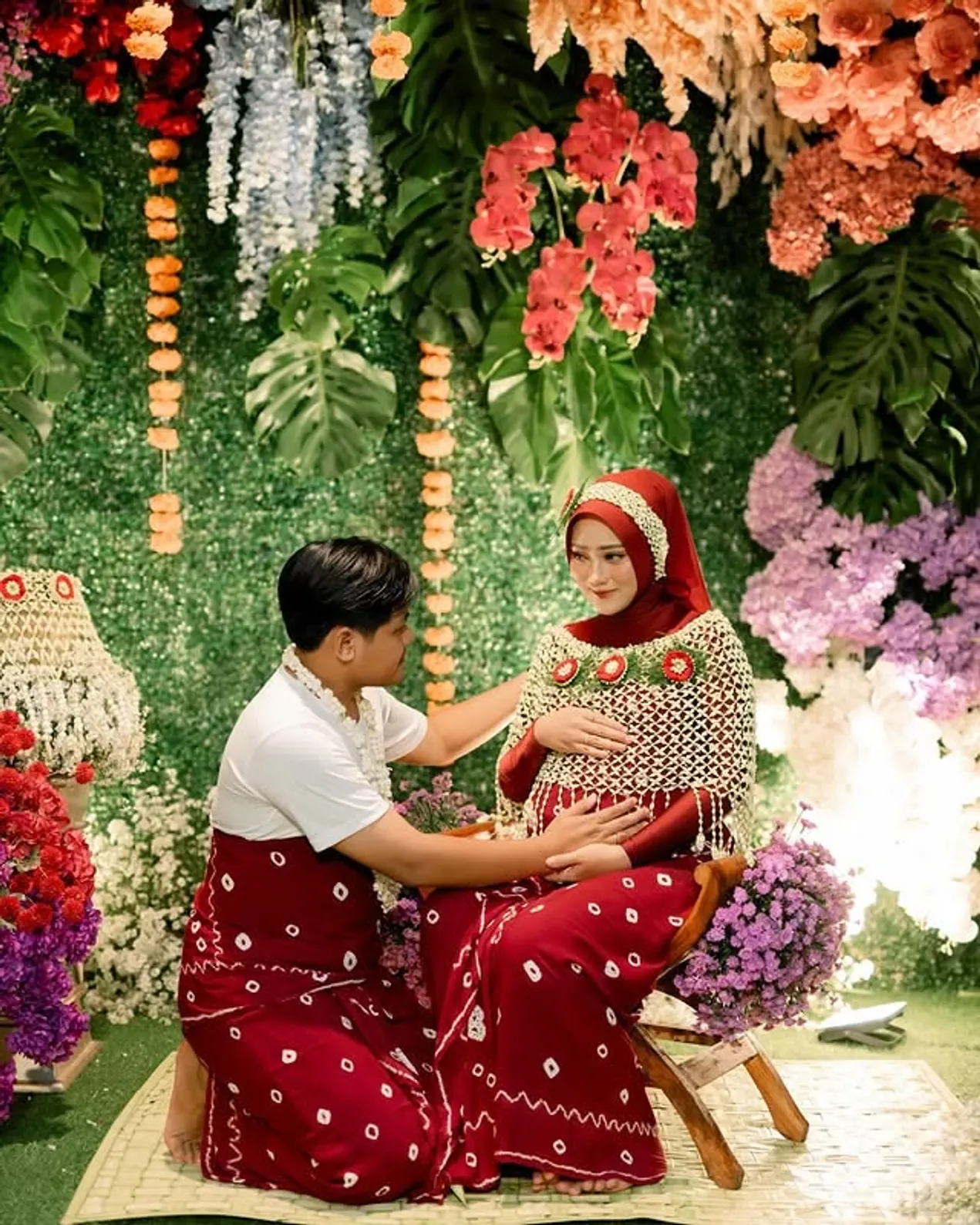
For Javanese communities, pregnancy is never treated as a purely biological event. It is a spiritual journey worth honoring, and one of the most heartfelt ways of doing so is through mitoni, a ceremonial tradition held when a woman's first pregnancy reaches its seventh month. The word "mitoni" itself comes from "pitu," the Javanese word for seven, reflecting how deeply the number seven shapes every part of this ritual.
This article explores the origin and meaning of mitoni, walking through its most recognizable stages, from the purifying siraman bath and the symbolic changing of batik cloths to the carved coconut-breaking ritual and the playful rujak or dawet selling custom. It also looks at why mitoni continues to matter today as a way of binding families and communities together around a shared moment of hope.
Origin and Meaning of Mitoni
Traditionally, mitoni is held specifically for a woman's first pregnancy, unlike subsequent pregnancies, which are usually not marked with a ceremony of this scale. The tradition is also commonly known as "tingkeban," a term that refers to the closing of one life stage and the opening of another as the expectant mother approaches childbirth. In Javanese belief, the seventh month is considered a meaningful milestone, as the unborn child is thought to have reached sufficient maturity, with the final stretch toward birth now underway.
At its core, mitoni is an expression of prayer and hope. The ceremony gives the extended family a formal occasion to ask for the safety and wellbeing of both mother and child, while also giving thanks for a pregnancy that has progressed smoothly to this point. These values of gratitude and hope run throughout Javanese culture, where significant life transitions are rarely marked alone; they are marked communally, through shared ritual and collective blessing.
The Siraman Ritual and Its Symbolism
One of the most recognizable stages of mitoni is siraman, a ritual bathing of the expectant mother typically performed by elder female relatives or respected community elders. The water used in this ritual is mixed with bunga setaman, an arrangement of several kinds of fragrant flower petals, giving the bath a distinct, calming scent. According to Javanese tradition, this act is believed to purify the mother's body and spirit as she prepares to welcome her child into the world.
Each elder participating in the siraman usually takes a turn pouring the water, a gesture meant to convey individual prayers and blessings from the people the family holds in highest regard. The moment carries weight beyond its physical act of washing; it reaffirms the emotional bond between the expectant mother and her extended family. Siraman serves as a reminder that the journey toward childbirth is never walked alone, but is accompanied by the prayers and support of those closest to her.
The Kain and Coconut-Breaking Tradition
After the siraman, the expectant mother traditionally changes through several batik kain, often cited as seven different cloth motifs, in front of the assembled guests. With each change, guests are typically asked whether the cloth suits her, and the customary answer of "not quite yet" is repeated until the seventh cloth is worn. According to Javanese belief, every cloth change carries its own symbolic hope or prayer for the child who is yet to be born.
Another eagerly anticipated part of the ceremony is the breaking of a young coconut, or kelapa gading, carved beforehand with images resembling Kamajaya and Kamaratih, figures from Javanese mythology who represent an ideal, handsome and beautiful couple. The coconut is then split open by the expectant father, and in folk belief, the way it splits is sometimes read for playful clues about the baby to come. This practice, however, is treated more as festive tradition than as a literal prediction to be taken at face value.
The Rujak and Dawet Selling Custom
One of the liveliest moments of mitoni is the tradition of selling rujak, a mix of fresh fruit with a sweet and spicy chili sauce, or dawet, a refreshing drink made from rice flour and palm sugar. During this custom, guests "buy" servings of rujak or dawet using pretend money, often fashioned from broken roof tiles or clay shards, creating a warm and cheerful atmosphere among everyone present.
In Javanese folk belief, the taste guests happen to buy is sometimes playfully linked to guesses about the baby's gender, a sour taste hinting at a girl and a sweet one at a boy, though this is purely lighthearted lore rather than any established fact. Beyond the guessing game, the true purpose of this custom lies in togetherness, as every guest becomes part of the shared joy surrounding a family soon to welcome a new member.
Mitoni's Role in Family and Community Today
Behind all its symbolism and ritual steps, mitoni is, at its heart, an expression of community. The ceremony brings relatives, elders, and neighbors together in one place and time, strengthening a sense of belonging and social support around the family preparing for a new arrival. The event typically closes with a selamatan, a communal prayer asking for the safety of both mother and child through the remainder of the pregnancy and the birth itself.
Even amid modern life, many Javanese families continue to preserve mitoni, sometimes adapting its format to be more practical for contemporary schedules and settings. This continuity shows that mitoni is far from an outdated custom; it remains a living reflection of enduring cultural values, gratitude, hope, and the importance of facing life's major transitions together with one's closest community.
FAQ
What does the word "mitoni" mean?
The word comes from "pitu," the Javanese term for seven, since the ceremony is held when a pregnancy reaches its seventh month.
Is mitoni the same as tingkeban?
Yes, both terms refer to the same ceremony; "tingkeban" is simply another common name for mitoni used in various parts of Java.
When is mitoni traditionally held?
Mitoni takes place in the seventh month of pregnancy, traditionally only for a woman's first pregnancy.
Why is mitoni only held for a first pregnancy?
Traditionally, a first pregnancy is seen as a major life transition, which is why it receives this special ceremonial recognition.
What is the purpose of the siraman ritual?
Siraman is believed to purify the expectant mother's body and spirit before she welcomes her child into the world.
Who usually performs the siraman?
Siraman is typically carried out by elder female relatives or respected community elders, who take turns pouring the water.
What does changing through several batik cloths symbolize?
According to Javanese belief, each cloth change represents a distinct hope or prayer for the future of the unborn child.
Who are Kamajaya and Kamaratih in the mitoni tradition?
Kamajaya and Kamaratih are figures from Javanese mythology symbolizing an ideal, handsome and beautiful couple, carved onto the coconut used in the ceremony.
Can the way the coconut splits really predict the baby?
This is only treated by some as part of the ceremony's festive folklore, not as a literal or scientific prediction.
What is sold during the rujak or dawet custom in mitoni?
Guests can buy rujak, a spicy-sweet fruit salad, or dawet, a traditional sweet drink, using pretend money as part of the ritual.
Can the taste of rujak really reveal the baby's gender?
No, that association is simply playful folklore meant to entertain guests, not a scientifically proven fact.
Is mitoni still practiced by Javanese communities today?
Yes, many Javanese families continue to hold mitoni, though some elements are now adapted to be simpler and more practical.
Mitoni stands as one of the richest expressions of Javanese cultural heritage, weaving together the purifying siraman bath, the prayer-laden changing of cloths, and the communal joy of the rujak and dawet selling custom. More than a ceremonial formality, it is a reminder that new life is always worth welcoming with gratitude and the support of those closest to the family. Read also Sedekah Bumi: A Javanese Expression of Gratitude for the Earth, or The Grebeg Tradition at the Yogyakarta and Solo Palaces: Meaning and Sequence of Events to explore more Javanese ceremonial traditions.